Vietnam is an easy and welcoming country to travel in, but a few practical details can make your first days much smoother. How much cash should you carry? Which SIM card should you buy? How do you cross the street without panic? These Vietnam travel tips cover money, phones, apps and getting around, based on the questions our guests ask before they arrive.
Money in Vietnam
The Vietnamese dong
The local currency is the Vietnamese dong (VND). Because the numbers are large, prices often have many zeros, and it is easy to confuse notes. The 10,000 and 100,000 notes, and the 20,000 and 200,000 notes, look similar at a glance. Take a moment to check before you hand over money, and keep larger notes separate from small ones.
Exchange rates change, so check a currency app before you travel. A useful trick is to drop the last three zeros and think in thousands: a 50,000 dong bowl of noodles becomes 50 in your head.
Cash or card?
- Cards (Visa and Mastercard) are accepted in most hotels, larger restaurants, supermarkets and shops in cities.
- Cash is still king at markets, street food stalls, small cafes, taxis without apps and in the countryside.
- QR payments through local banking apps are very common, but usually require a Vietnamese bank account.
- US dollars are accepted in some hotels and are useful at land borders into Cambodia and Laos, but you will get a better rate paying in dong in Vietnam.
ATMs
ATMs are easy to find in cities and towns. Most charge a small fee per withdrawal, and there is a limit on how much you can take out at once. In the mountains, villages and islands, ATMs are rare or absent, so withdraw enough cash before you head to rural areas. Let your bank know you are travelling to avoid blocked cards.
Tipping
Tipping is not expected in local restaurants and street food stalls, but it is appreciated for good service in tourist restaurants and hotels. For private guides and drivers, a tip at the end of the trip is customary if you are happy with their work. We are happy to suggest amounts if you are unsure.
SIM cards and internet
A local SIM card or eSIM is inexpensive and makes travelling much easier, for maps, messages, translation and ride-hailing apps. You can buy one at the arrivals hall of the main airports or from official shops of the big networks in town. Bring your passport, because registration is required by law. Many travellers also buy an eSIM online before departure.
Mobile coverage is good across most of the country, including many rural areas, though it can be patchy in remote mountain valleys and on some islands. Wifi is available in almost all hotels and cafes, and in many homestays.
Useful apps
- Grab: book cars and motorbike taxis in cities, with the price shown before you ride.
- Google Maps: reliable for walking, finding addresses and checking travel times.
- Google Translate: download Vietnamese for offline use; the camera function reads menus and signs.
- WhatsApp: the easiest way to stay in touch with us and your guide.
- A currency converter: helpful until you get used to the zeros.
Getting around Vietnam
Domestic flights
Flights connect Hanoi, Hue, Da Nang, Saigon, Dong Hoi and Phu Quoc in one to two hours. They are the best way to cover long distances and save whole days on the road.
Trains
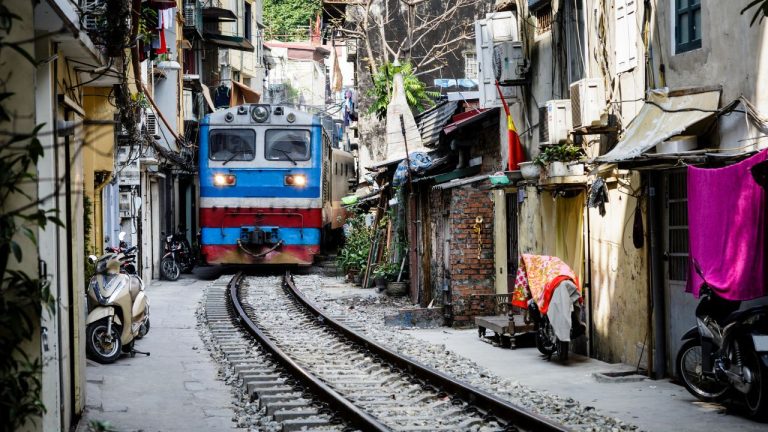
The north-south railway is slow but scenic, especially the stretch between Hue and Da Nang along the coast. The night train from Hanoi to Lao Cai is a popular way to reach Sapa.
Private car and driver
On our tours, a private vehicle and driver take care of road transfers. It is the most comfortable way to travel between places, and you can stop whenever you want for photos, coffee or a market.
In cities
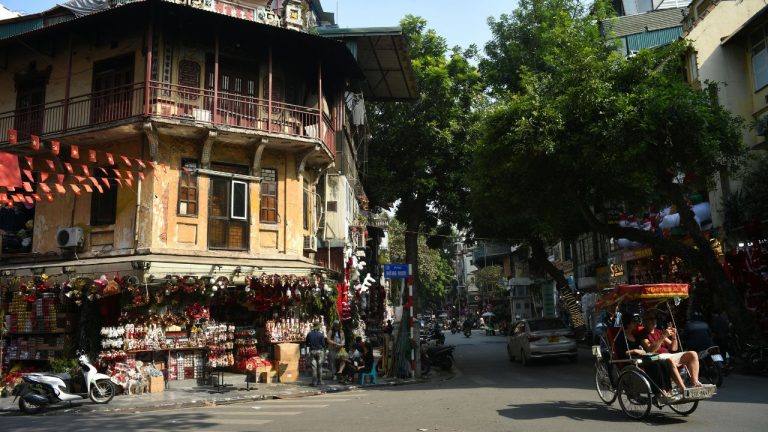
Walking is the best way to explore old quarters and markets. For longer distances, use Grab or metered taxis from reputable companies. Cyclos, the traditional bicycle rickshaws, are fun for a short ride; agree the price before you start.
Our tip
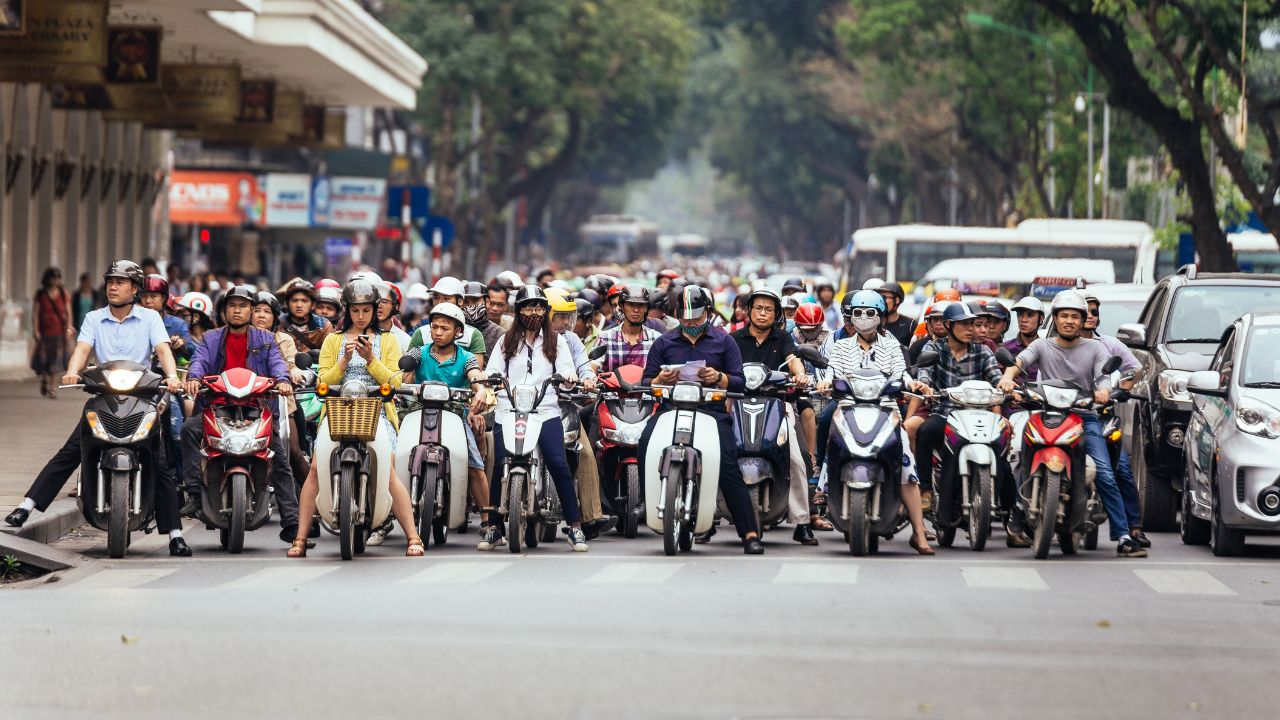
Crossing the street in Vietnam is easier than it looks. Walk slowly and steadily, do not stop suddenly or run, and let the motorbikes flow around you. Your guide will show you on the first day.
Health and safety basics
- Drink bottled or filtered water, not tap water.
- Use sun cream and insect repellent, especially at dawn and dusk.
- Street food is generally safe; choose busy stalls where food is cooked fresh.
- Keep your phone and bag on the side away from the road, as bag snatching from motorbikes can happen in big cities.
- Have travel insurance that covers activities like cycling, trekking and kayaking.
Electricity and plugs
Vietnam uses 220 volts. Most sockets accept two round pins (type C) or two flat pins (type A), and many hotels have universal sockets. A small universal travel adapter covers everything. Phone and laptop chargers usually work on 220 volts, but check hair dryers and other appliances before you plug them in.
A few useful Vietnamese words
Vietnamese is a tonal language, so pronunciation is tricky, but people are delighted when visitors try. A few words go a long way:
| English | Vietnamese | Sounds roughly like |
|---|---|---|
| Hello | Xin chào | sin chow |
| Thank you | Cảm ơn | gam un |
| Yes / No | Vâng / Không | vung / khome |
| How much? | Bao nhiêu? | bow nyew |
| Delicious | Ngon quá | ngon kwah |
| Cheers! | Một, hai, ba, dô! | mot, hai, bah, yo |
Etiquette basics
- Dress modestly when visiting temples and pagodas: cover shoulders and knees, and take off your shoes where others do.
- Use both hands, or your right hand, when giving or receiving something, especially to older people.
- Avoid public displays of anger; a calm smile solves most problems.
- Ask before photographing people, especially in rural areas and markets.
- When eating, do not leave chopsticks standing upright in a bowl of rice.
Frequently Asked Questions
How much cash should I carry in Vietnam?
Enough for a day or two of meals, drinks and small purchases, and more before visiting rural areas where ATMs are scarce. Cards work in most hotels and larger restaurants.
Can I use my credit card in Vietnam?
Yes, in most hotels, larger restaurants and shops in cities. Markets, street food stalls and the countryside are mostly cash only.
Which SIM card is best for tourists?
The main networks all offer good tourist packages with plenty of data. Buy at the airport or from official shops, or choose an eSIM before you travel.
Is Grab available everywhere in Vietnam?
Grab works in all major cities and many tourist towns, but not in rural areas or small villages.
Plan Your Trip With Us
Questions about the practical side of your trip? Ask us anything before you book.