The Hanoi Old Quarter is the beating heart of the capital: a maze of narrow streets north of Hoan Kiem Lake where merchants and craftsmen have lived and traded for centuries. Many streets still carry the name of the goods once sold there, Hang Bac for silver, Hang Ma for paper, Hang Thiec for tin, and behind the busy shopfronts you find tiny temples, communal houses and family courtyards.
The best way to explore is on foot. This self-guided walk takes about two to three hours at an easy pace and covers around 3 kilometres. It links the main sights with quieter corners, and you can shorten it or stop for coffee whenever you like.
Before you start
- When: early morning (6:30 to 9:00) for markets and cooler air, or late afternoon into the evening for street food and lights.
- Wear: comfortable shoes; pavements are often blocked by parked motorbikes and stalls, so you will walk on the road edge.
- Bring: water, small notes for snacks and entrance fees, and a fully charged phone with a map.
- Weekends: from Friday to Sunday evening, the streets around Hoan Kiem Lake close to traffic and become a walking street.
The route: 10 stops through the Old Quarter
1. Hoan Kiem Lake and Ngoc Son Temple
Start at the northern shore of Hoan Kiem Lake, the Lake of the Returned Sword. Cross the red The Huc Bridge to Ngoc Son Temple, set on a small island and dedicated to the national hero Tran Hung Dao. In the morning the lakeside is full of people exercising, dancing and playing badminton.
2. Hang Dao, the old silk street
Walk north along Hang Dao, once the street of silk dyers and now lined with clothes and shoe shops. It leads straight into the heart of the quarter and becomes the evening night market on weekends.
3. 48 Hang Ngang
Continue into Hang Ngang. At number 48 is the house where Ho Chi Minh drafted Vietnam’s Declaration of Independence in 1945. The small museum upstairs shows the rooms as they were.
4. Dong Xuan Market
At the northern end of Hang Duong stands Dong Xuan, the largest covered market in Hanoi, built in the French period. Inside you find fabrics, household goods and dried foods; the lanes around it are packed with fresh produce stalls and street food in the early morning.
5. Bach Ma Temple
Head east to Hang Buom and Bach Ma Temple, the White Horse Temple, considered one of the oldest temples in the city. Legend says a white horse showed the king where to build the walls of the old citadel. Step inside to see the carved wooden altars and the calm courtyard.
6. Ma May and the heritage house
Turn onto Ma May, one of the liveliest streets of the quarter. At number 87 is a restored traditional tube house, open to visitors, which shows how merchant families lived: a narrow shop at the front, open courtyards and living rooms stretching far back from the street.
7. O Quan Chuong gate
At the end of Hang Chieu stands O Quan Chuong, the last remaining gate of the old city walls. It is a quiet spot to imagine the citadel that once surrounded this area.
8. Hang Bac and Hang Ma
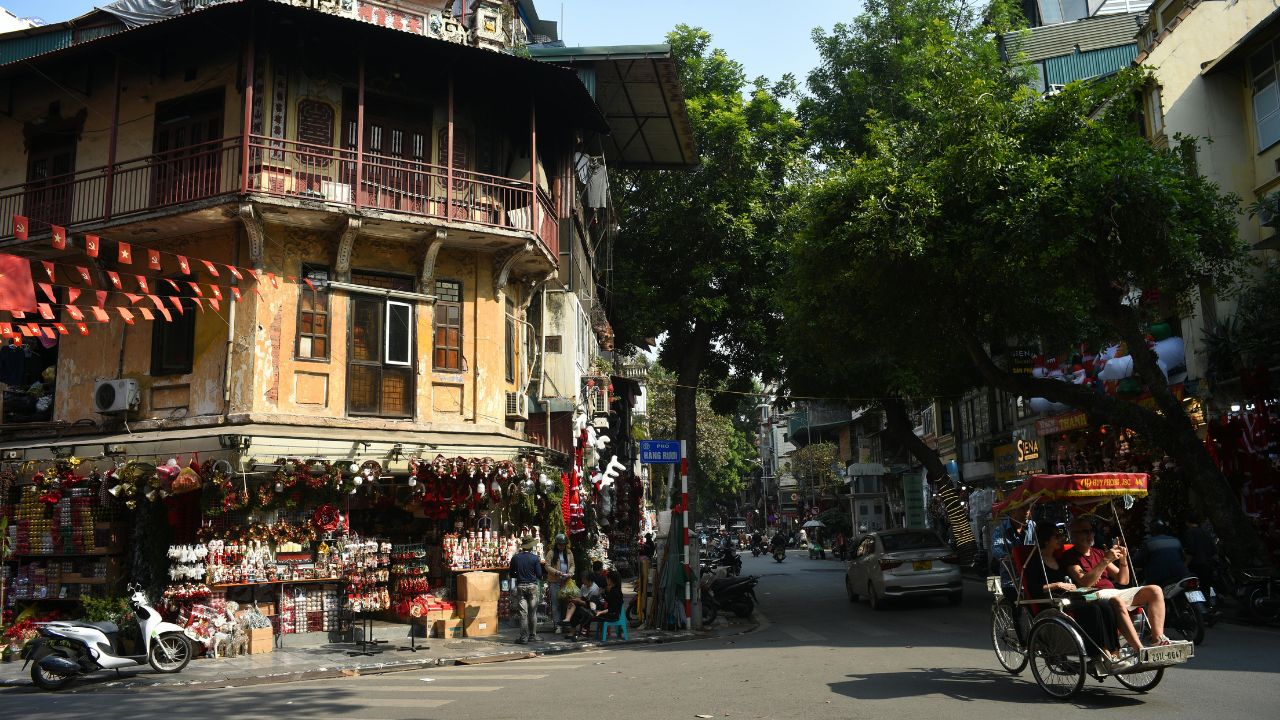
Walk back towards the lake through Hang Bac, the silversmiths’ street, where a few workshops still make jewellery by hand, and Hang Ma, which sells paper offerings, lanterns and decorations for festivals. Before Tet and the Mid-Autumn Festival, Hang Ma is one of the most colourful streets in Vietnam.
9. Lan Ong, the medicine street
Detour into Lan Ong, where traditional herbal medicine shops sell roots, bark, dried mushrooms and seeds from large wooden drawers. The smell of herbs fills the whole street.
10. Ta Hien in the evening
Finish at the junction of Ta Hien and Luong Ngoc Quyen, known for its busy evening scene of bia hoi, grilled snacks and people watching. It is lively and noisy, the perfect end to a walk through the Old Quarter.
Our tip
Look up. Above the shopfronts, many buildings still have their original balconies, shutters and decorative facades from the late 19th and early 20th centuries, and some have tiny family altars and plants on the rooftops.
Train Street
Just west of the Old Quarter, a section of railway runs between houses so close that residents move their chairs when the train passes. Train Street became famous online, and local authorities have at times restricted access to the cafes along the tracks for safety. If you visit, follow the instructions of police and residents, stay well back from the rails and do not stand on the tracks.
Where to stop for coffee and food
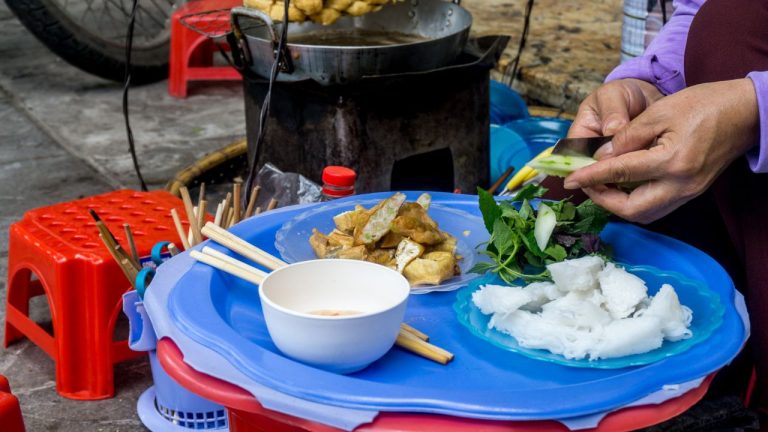
Along the way, stop for an egg coffee in a cafe tucked up a staircase, a bowl of banh cuon for breakfast or bun cha at lunchtime. Our guide to Hanoi street food lists the dishes to look for.
Walking safely in the Old Quarter
- Cross the road slowly and steadily; motorbikes will flow around you.
- Walk in single file on the edge of the road where the pavement is blocked.
- Keep your bag on the side away from traffic.
- Ask before photographing people, especially vendors and older residents.
- Agree prices before buying from street sellers.
Explore with a local guide
A walk with a local guide brings the Old Quarter to life: the stories behind the street names, the family workshops still working behind closed doors and the small temples you would walk past without noticing. Our Hanoi city tours combine the Old Quarter with the city’s other highlights.
A short history of the 36 streets
The Old Quarter is often called the 36 Streets, a name that goes back to the 15th century, when artisans from villages around the Red River Delta settled here to sell their goods to the royal citadel. Each guild gathered on its own street, built a communal house to honour the founder of its craft and passed the trade down through the family.
Land was taxed by the width of the shopfront, so families built long, narrow tube houses, sometimes only three metres wide but more than fifty metres deep, with courtyards to bring in light and air. Many streets have changed their trade over the years, but the layout, the communal houses and the spirit of small family businesses remain, which is what makes a walk here so rewarding.
Frequently Asked Questions
How long does it take to walk around the Hanoi Old Quarter?
About two to three hours for a relaxed walk covering the main sights, longer if you stop for coffee, food and shopping.
When is the best time to visit the Old Quarter?
Early morning for markets and cooler weather, and weekend evenings when the streets around Hoan Kiem Lake become a walking street.
Is the Old Quarter safe at night?
Yes, it is lively and generally safe in the evening. Watch for traffic and keep your belongings close in crowded places.
Can I visit Train Street?
Access is sometimes restricted by the authorities for safety. If it is open, follow local instructions and stay well away from the tracks.
Plan Your Trip With Us
Discover the Old Quarter and the rest of Hanoi with a local guide who knows every lane.