For centuries, the rivers of the Mekong Delta were its roads, and trade happened on the water. Farmers loaded their boats with fruit and vegetables, rowed to a wide bend in the river and sold directly from their decks to traders and shopkeepers. These Mekong floating markets are still one of the most memorable sights in southern Vietnam.
Today, with new roads and bridges, some markets have shrunk or disappeared, while others remain busy every morning. This guide explains which floating markets are worth visiting, how they work, when to go and how to see them in a respectful way.
How a floating market works
Floating markets are mainly wholesale markets. Large boats arrive from the countryside piled high with pineapples, watermelons, pumpkins, cabbages or sweet potatoes. Buyers in smaller boats come alongside, negotiate and load up the goods to sell in towns and markets on land.
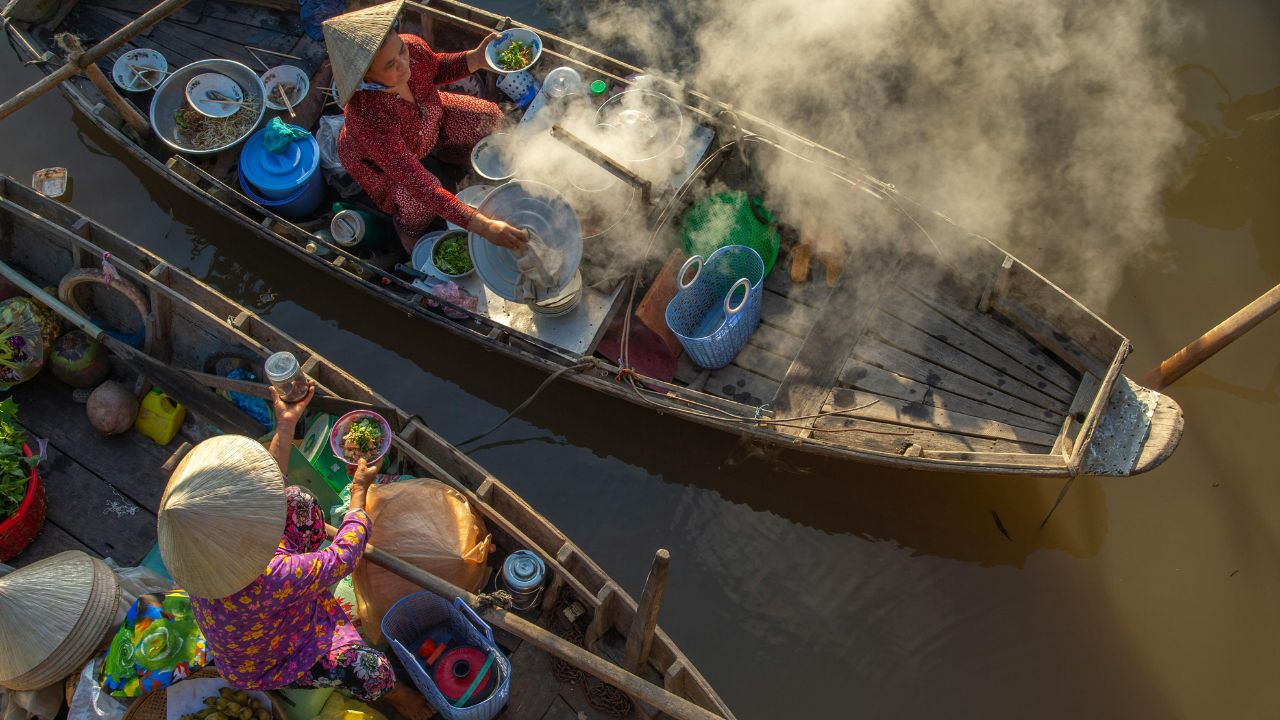
Because there are no shop signs on the water, sellers hang a sample of what they sell from a tall bamboo pole on their boat, called a cay beo. A pole with a pineapple means pineapples are for sale. Between the big boats, women paddle small sampans selling coffee, noodle soup and snacks to the traders, and to visitors.
Cai Rang: the largest floating market
Cai Rang, just outside Can Tho, is the biggest and most famous floating market in the delta. It is busiest from around 5:30 to 8:00 in the morning, when hundreds of boats gather near the Cai Rang bridge. You can watch the trading, drink coffee on a passing boat and have a bowl of noodle soup on the water. After the market, boats usually continue into smaller canals to visit orchards and family workshops, such as a rice noodle maker.
Cai Rang is visited by many tourist boats, but it is still a working market and a wonderful sight. To see it, you need to stay overnight in or near Can Tho. Our three-day Vinh Long and Can Tho trip and the Saigon to Can Tho cycling journey both include it.
Phong Dien: smaller and more local
About 20 kilometres from Can Tho, Phong Dien is a smaller floating market with fewer tourist boats. It is less spectacular than Cai Rang but more intimate, with local people buying and selling fruit and vegetables for daily use. It combines well with a visit to the orchards and canals of the area.
Cai Be and Nga Bay
Cai Be, in Tien Giang province, was once a busy floating market but has become much smaller as trade moved to the roads. It is still a pleasant place to visit for its riverside village, old houses and family workshops. Nga Bay, in Hau Giang province, takes its name from the seven rivers that meet there and was historically one of the most important markets in the region; today it is smaller but still atmospheric.
Long Xuyen and the far south-west
Further west, Long Xuyen has a lively floating market and floating houses with fish farms beneath them. It is far less visited than Cai Rang and is a good stop on a longer journey towards Chau Doc. See our Deep South journey from Saigon to Chau Doc.
Our tip
Ask your boat driver to switch off the engine for a few minutes when you reach the market. Drifting quietly among the trading boats, you hear the bargaining, the laughter and the paddles, and it feels much more like the real market than speeding past.
When to visit
- Time of day: early, between sunrise and 8:00 AM. By mid-morning most of the trading is over.
- Season: markets run all year. The weeks before Tet, the Lunar New Year, are especially busy and colourful.
- Day of the week: markets are open every day, but weekdays are quieter for visitors.
Visiting respectfully
- Remember that this is people’s work: keep your boat at a polite distance and do not block trading boats.
- Ask before photographing people up close, and buy a coffee or some fruit if you take many photos of a seller.
- Avoid single-use plastic; bring your own bottle and bag.
- Choose a small boat rather than a large tourist boat; it is quieter and more comfortable.
Can you see a floating market on a day trip from Saigon?
Usually not. Cai Rang is about three and a half to four hours from Saigon by road, and the market is busiest just after sunrise. To see it properly, you need to spend at least one night in the delta. Read our guide to choosing a Mekong Delta day trip or overnight tour.
What to eat and drink on the water
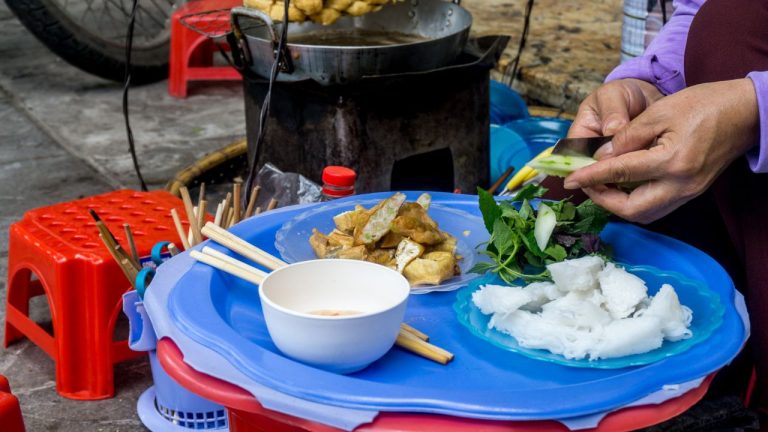
Breakfast on a floating market is part of the fun. Small boats paddle between the traders selling hot Vietnamese coffee, iced tea, fresh coconuts and bowls of hu tieu, a southern noodle soup with pork and shrimp, served straight from a pot balanced on the boat. Others sell banh mi, sticky rice and seasonal fruit: mangoes, rambutans, longans, pomelos and, in the right season, durian.
Your boat driver can call a seller over and you eat sitting in the boat, rocking gently on the river while the market goes on around you. It is one of the simple pleasures of the Mekong.
Combining the market with the rest of the day
The market is over by mid-morning, which leaves the rest of the day for exploring. Most boats continue into the small canals around Can Tho, lined with fruit orchards and wooden houses, where you can walk through a garden, visit a family making rice noodles or rice paper, and stop at a local pagoda. In the afternoon, many travellers cycle the quiet roads around Can Tho or continue their journey towards Long Xuyen and Chau Doc, or back towards Saigon.
Photography tips
- Arrive at first light for soft colours and mist on the water.
- Use a fast shutter speed; boats and paddles move constantly.
- Shoot from a low angle in your boat to capture the tall poles with their hanging samples.
- Bring a dry bag to protect your camera from splashes.
Frequently Asked Questions
What is the biggest floating market in Vietnam?
Cai Rang, near Can Tho in the Mekong Delta, is the largest and most famous floating market.
What time does the Cai Rang floating market open?
It is busiest from around 5:30 to 8:00 in the morning. By mid-morning most boats have left.
Are floating markets disappearing?
Some have shrunk as roads and bridges replaced river transport, but Cai Rang, Phong Dien and Long Xuyen are still active every morning.
Can I buy things at the floating market?
Yes. You can buy fruit, coffee and snacks from small boats, although most trade is wholesale between farmers and traders.
Plan Your Trip With Us
Wake up on the river and see the floating markets of the Mekong Delta on one of our overnight journeys.