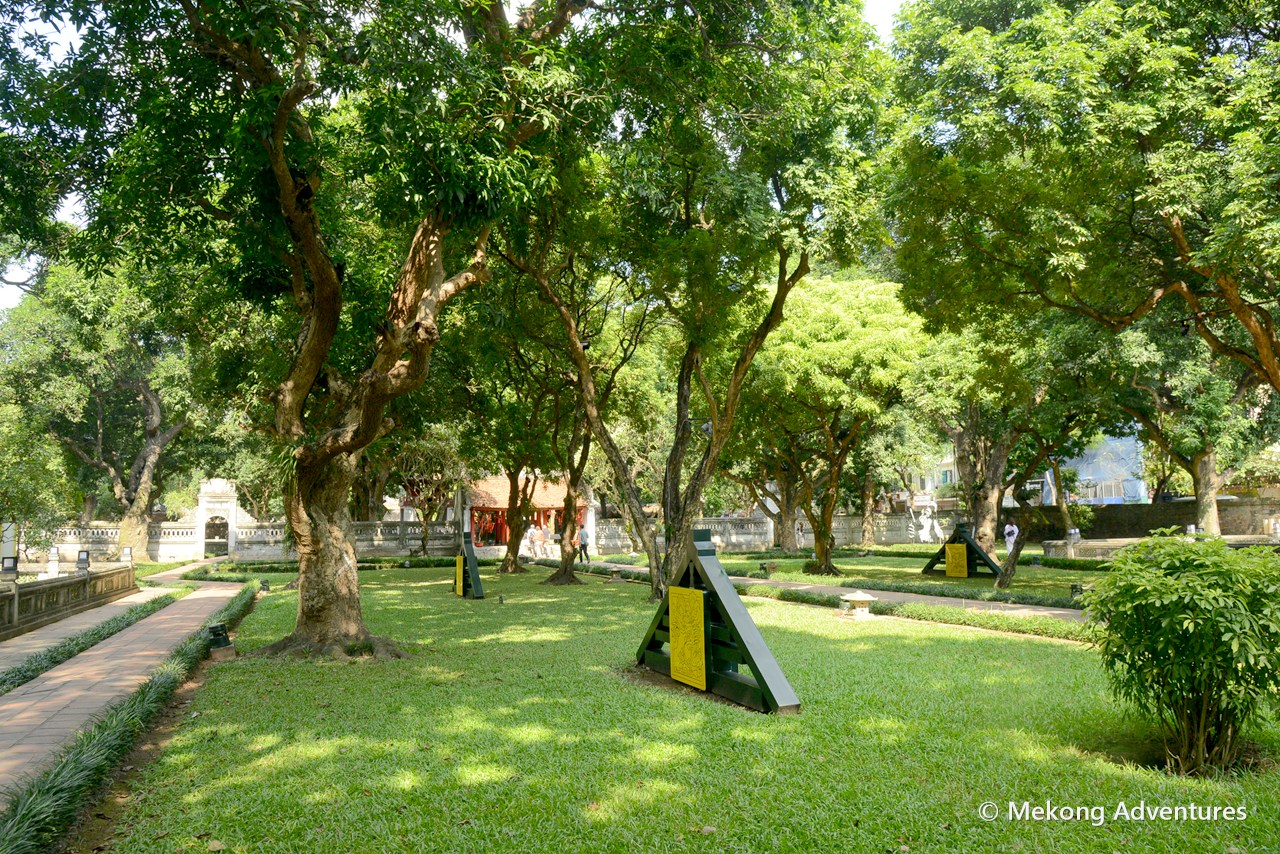
The Temple of Literature is best understood on foot, one courtyard at a time. The complex is laid out as five walled spaces running from south to north, each quieter and more sacred than the last, so a visit feels like a slow walk from the everyday world into a place of study and memory. Here is what you will see at each stop — and where to point your camera.
Before you go in
Enter through the grand front gate on Quoc Tu Giam street and keep walking straight ahead; the whole site follows a single north–south line, so you cannot really get lost. Give yourself about an hour. For hours, tickets and directions, see our complete guide to the Temple of Literature.
First courtyard: the gate and the path of old trees
Past the entrance, the first courtyard is a calm avenue of ancient trees and clipped lawns leading to the Great Middle Gate (Dai Trung Mon). The noise of the street falls away almost at once. It is a gentle introduction — take your time and let your eyes adjust to the shade.
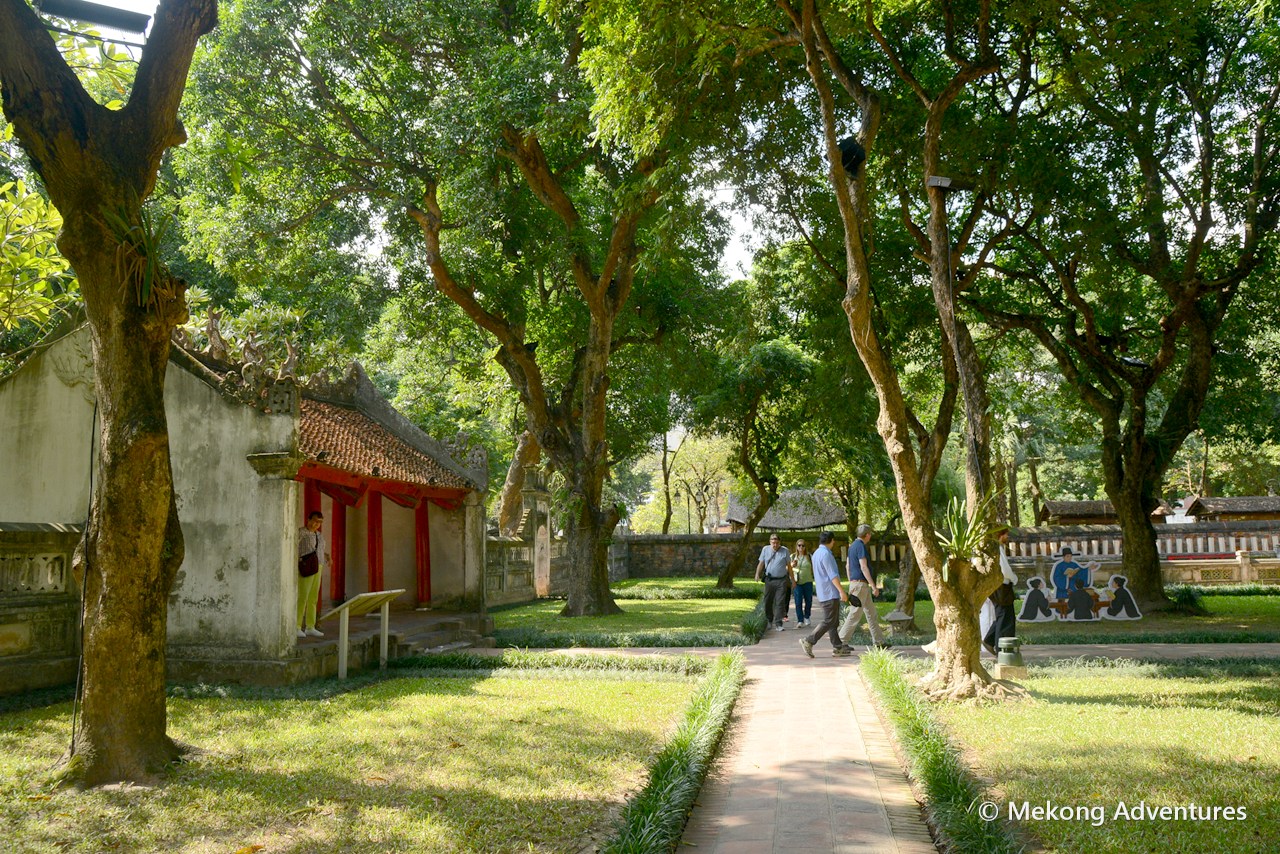
Second courtyard: Khue Van Cac, the pavilion of Hanoi
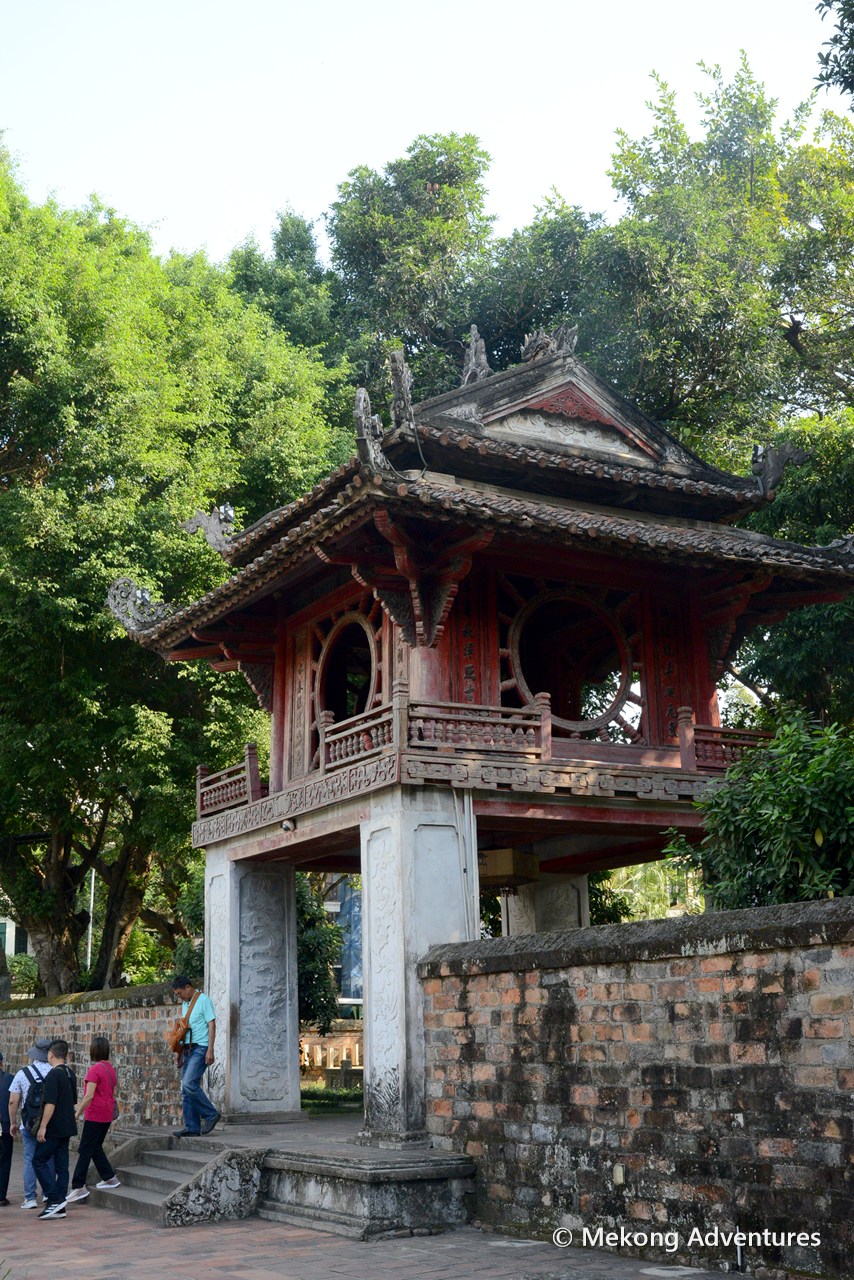
The second courtyard ends at the Khue Van Cac, the Constellation of Literature Pavilion: a small, elegant wooden structure raised on four whitewashed stone pillars, with round windows meant to suggest a shining star. Built in 1805, it has become a symbol of Hanoi and even appears on the 100,000 dong banknote. It is the most photographed spot in the complex — frame it through the gate for the classic shot.
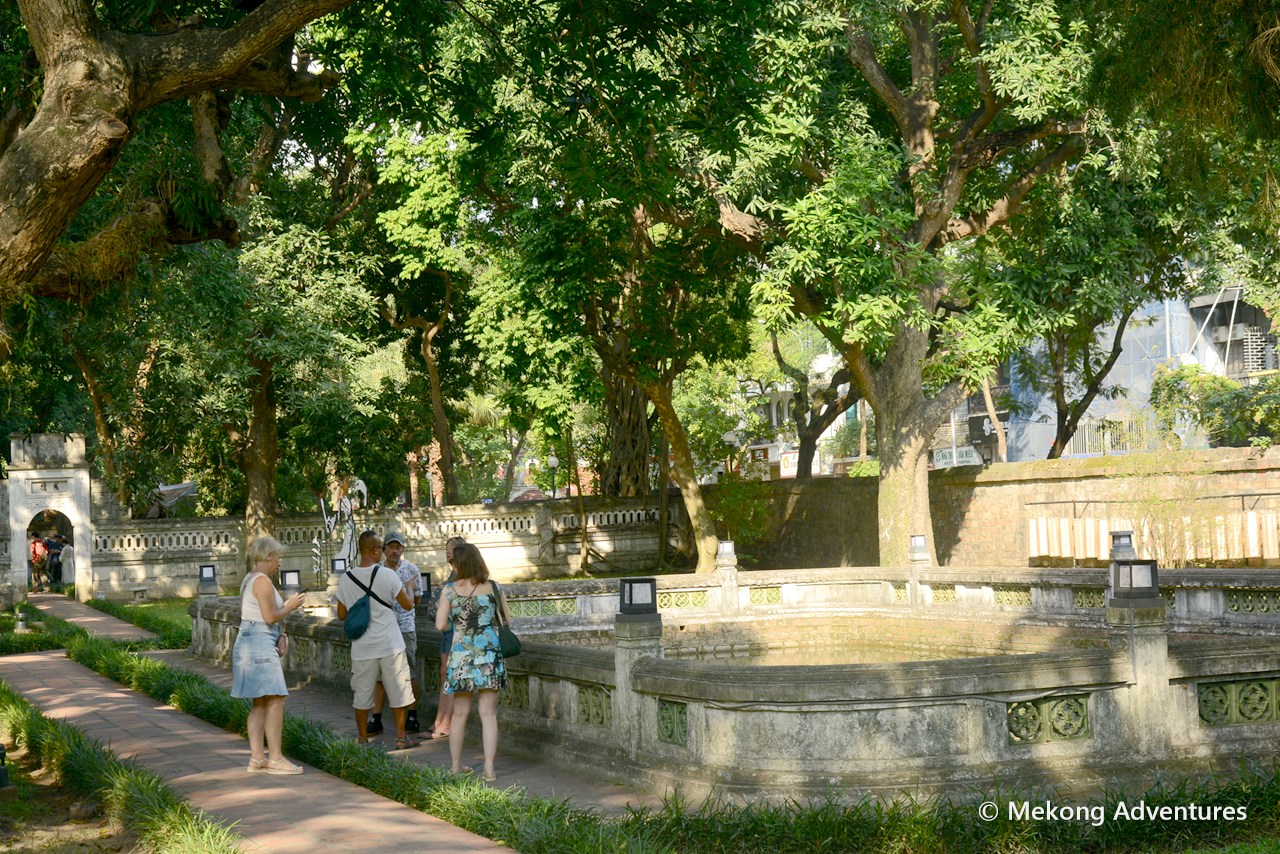
Third courtyard: the Well of Heavenly Clarity and the stelae
Through the pavilion you reach the heart of the temple: a large square pond called the Well of Heavenly Clarity, with the complex’s greatest treasures on either side. Here stand the 82 doctoral stelae — stone tablets on the backs of carved tortoises, each engraved with the names of scholars who passed the royal examinations between 1442 and 1779. They are listed on UNESCO’s Memory of the World Register. Read the history behind the stelae to see why they matter so much.
Fourth courtyard: the House of Ceremonies and Confucius’s sanctuary
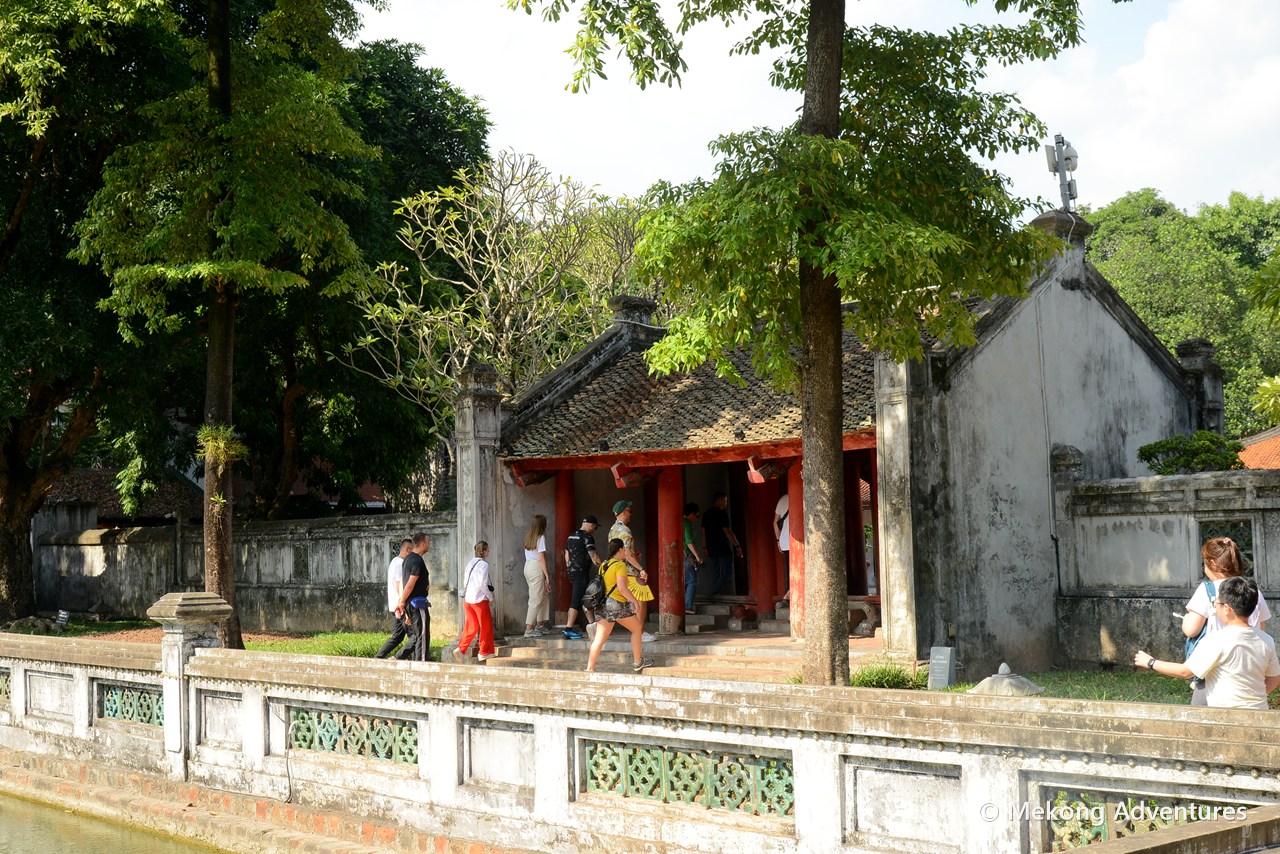
Beyond the stelae lies the ceremonial core, entered through the Gate of Great Success. The red-and-gold House of Ceremonies opens onto the sanctuary, where an altar honours Confucius and his closest disciples. A great bronze incense burner usually stands in the courtyard, and the carved roofs here are some of the finest in the city. This is the most atmospheric part of the temple, so linger a while.
Fifth courtyard: Thai Hoc and the Imperial Academy
The final courtyard holds the Thai Hoc hall, built on the site of the old Quoc Tu Giam — the Imperial Academy that made this Vietnam’s first university. Rebuilt around the year 2000, it honours the kings who founded the school and the revered teacher Chu Van An. Upstairs you will often find a quiet shrine and a view back down the axis you have just walked.
Photography and visiting tips
- Shoot early or late. Soft morning or late-afternoon light suits the tiled roofs and old trees, and the crowds are thinner.
- Frame Khue Van Cac through a gateway for depth, and look for reflections in the Well of Heavenly Clarity.
- Dress modestly — shoulders and knees covered — as this is still a working place of reverence.
- Visit in autumn if you can; the complex is loveliest in the dry, clear months. See the best time to visit Hanoi.
Frequently asked questions
How many courtyards does the Temple of Literature have?
Five, laid out in a line from south to north. You walk through them in order, from the entrance gate to the Thai Hoc hall at the far end.
What is the pavilion on the Vietnamese banknote?
That is the Khue Van Cac, the Constellation of Literature Pavilion in the temple’s second courtyard. Built in 1805, it is a symbol of Hanoi and features on the 100,000 dong note.
How long does it take to walk the whole temple?
Around 60 to 90 minutes at an unhurried pace, including time for photos and to read about the stelae.
Plan your trip to Hanoi
A slow walk through the Temple of Literature is one of the nicest mornings in Hanoi. We design private, flexible trips around the city and northern Vietnam — small roads, real neighbourhoods and time for photos. Start with our Hanoi destination page, or tell us what you have in mind and we will send a draft itinerary and a quote within 24 hours, with no obligation.
Prefer to chat? Message us on WhatsApp.