Choosing the best time to visit Vietnam is trickier than it looks. The country stretches about 1,650 kilometres from the mountains on the Chinese border to the Mekong Delta in the far south, and it has three very different climates. When Hanoi is cool and grey, Saigon can be hot and sunny; when the north is at its best, the central coast may be in the middle of its rainy season.
The good news is that there is no bad month to travel in Vietnam, only better and worse places for each month. In this guide we explain the weather in each region, the seasons we like most and how to plan a route that follows the good weather. At the end you will find a month-by-month summary and answers to the questions our guests ask most often.
Vietnam’s three climates at a glance
Broadly speaking, Vietnam has a subtropical climate in the north, a tropical monsoon climate on the central coast and a tropical climate in the south. In practice that means:
- The north (Hanoi, Sapa, Ha Giang, Halong Bay, Ninh Binh) has four seasons, with a cool winter and a hot, rainy summer.
- The centre (Hue, Hoi An, Da Nang, Phong Nha) is driest from February to August and gets most of its rain from September to December.
- The south (Saigon and the Mekong Delta) is warm all year, with a dry season from December to April and a rainy season from May to November.
Northern Vietnam: Hanoi, Sapa, Ha Giang and Halong Bay
Spring (March to May)
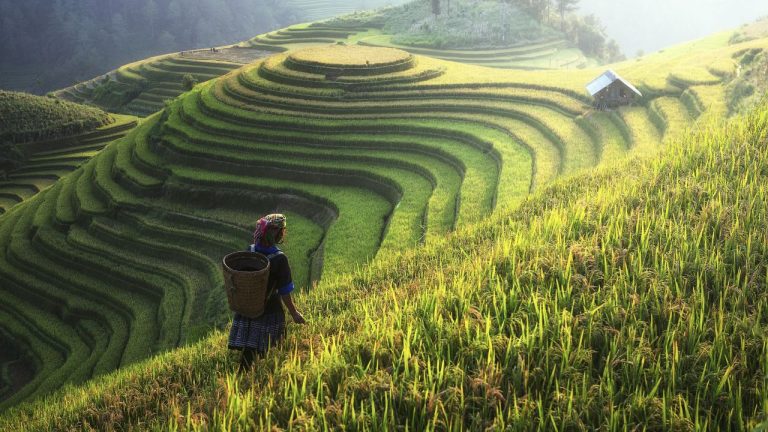
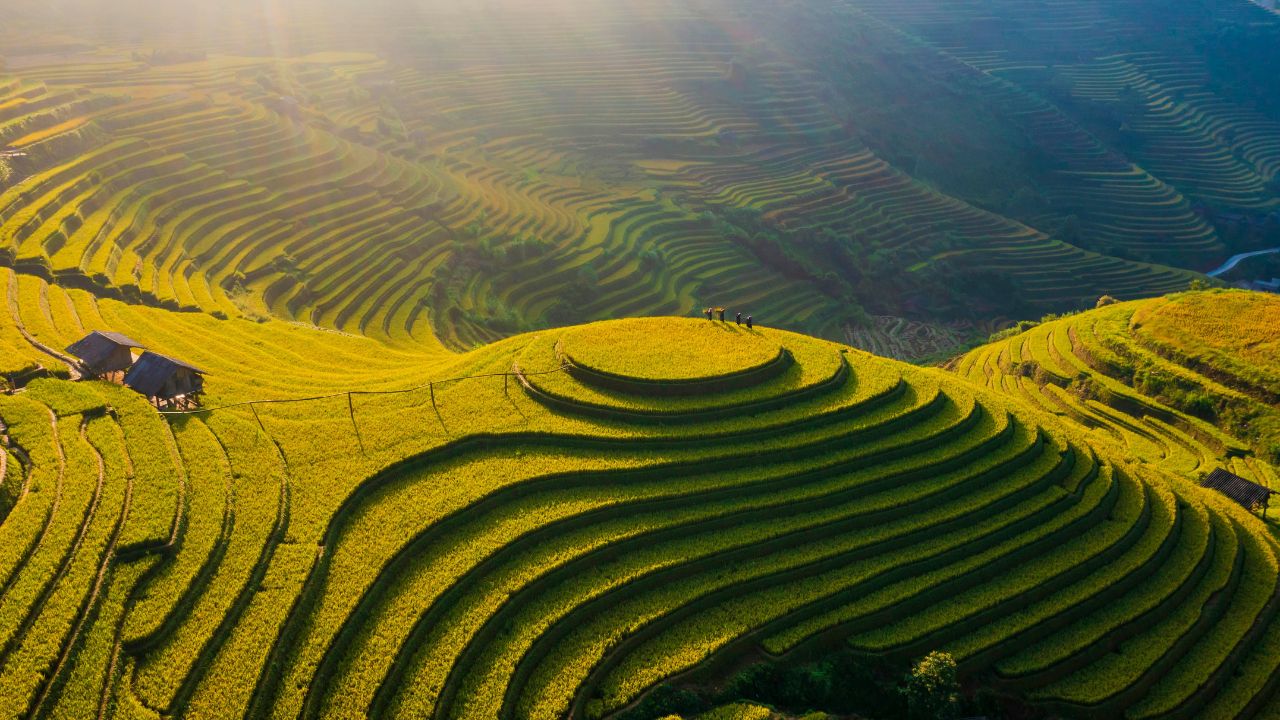
Spring is one of the loveliest times in the north. Temperatures are mild, the countryside turns green and the rice terraces of Sapa and Ha Giang are filled with water, reflecting the sky. In Hanoi the humidity rises in late spring, but evenings around the lakes are pleasant.
Summer (June to August)
Summer is hot and humid, with short, heavy downpours, especially in the afternoon. It is still a good time for Halong Bay and Lan Ha Bay, where the water is warm for swimming and kayaking, and the mountains are at their greenest. Occasional storms can delay boat departures, so we keep a little flexibility in the plan.
Autumn (September to November)
For many travellers, autumn is the best time to visit northern Vietnam. Skies are clearer, the air is drier and the rice terraces turn gold before the harvest, usually from mid-September to early October in Sapa and Mu Cang Chai. Hanoi is at its most charming, with cool mornings and warm afternoons.
Winter (December to February)
Winter in the north can be cold, damp and grey. Hanoi often sits around 15 to 20°C, while temperatures in the mountains can drop close to freezing, and on rare occasions there is frost or even snow in Sapa. Halong Bay is often misty, which has its own atmosphere but limits the views. Pack warm layers if you plan to trek.
Central Vietnam: Hue, Hoi An and Phong Nha
The central coast follows a different pattern from the rest of the country. From around February to August the weather is mostly dry and sunny, ideal for exploring Hue, Hoi An and the beaches nearby. May to August is hot, often above 35°C in the middle of the day, so we plan early starts and long lunches.
From September to December the centre receives most of its annual rain, and the coast can be hit by tropical storms, most often in October and November. Hoi An’s old town sometimes floods, and some caves in Phong Nha close for safety. Travel is still possible, but it pays to keep plans flexible and to have indoor options ready.
Southern Vietnam: Saigon and the Mekong Delta
The south is warm all year, with temperatures usually between 25 and 35°C. The dry season, from December to April, brings blue skies and is the most popular time to visit Saigon and the Mekong Delta. March and April are the hottest months.
The rainy season, from May to November, usually means a short, heavy shower in the afternoon rather than days of rain. Mornings are often clear, the countryside is green and there are fewer visitors. In the Mekong Delta, the river is highest from August to November, the best time to see the flooded forest of Tra Su near Chau Doc, and the fruit season is at its peak from May to August.
Our tip
If you are travelling the whole length of Vietnam, March and April are often the easiest months, with good weather in the north, centre and south at the same time. For autumn trips, start in the north and finish in the south as the dry season begins.
Month-by-month summary
| Month | North | Centre | South |
|---|---|---|---|
| January | Cool, often grey | Some rain, improving | Dry and sunny |
| February | Cool, drizzle | Dry, mild | Dry and sunny |
| March | Mild, spring | Dry, pleasant | Dry, getting hot |
| April | Warm, very pleasant | Dry, warm | Hot, dry |
| May | Hot, some rain | Hot, dry | Rain begins |
| June | Hot, rainy | Hot, dry | Afternoon showers |
| July | Hot, rainy | Hot, dry | Afternoon showers |
| August | Hot, rainy | Hot, mostly dry | Afternoon showers |
| September | Warm, clearing | Rain begins | Rainy, green |
| October | Pleasant, clear | Rainy, storms possible | Rain easing |
| November | Cool, dry | Rainy, storms possible | Drier |
| December | Cold, grey | Some rain | Dry and sunny |
Holidays and festivals to plan around
Tet, the Lunar New Year, usually falls in late January or February. It is the most important holiday of the year, and a wonderful time to see families celebrate, but many shops and restaurants close for several days, trains and flights fill up quickly and prices rise. If your trip overlaps with Tet, book early and expect a slower pace.
Other busy periods include the national holidays around 30 April and 2 September, and the summer school holidays from June to August, when Vietnamese families travel to the beaches. Smaller festivals, such as the Mid-Autumn Festival with its lanterns and mooncakes, are a lovely bonus if your dates line up.
Cambodia and Laos
If you are adding Cambodia or Laos to your trip, the most comfortable months are November to February, when it is dry and less hot. March to May is very hot. The rainy season, from June to October, brings green rice fields, full rivers and fewer visitors, and the temples of Angkor look beautiful in the soft light after a shower.
Frequently Asked Questions
When is the best time to visit Vietnam overall?
March and April are the best months for a trip covering the north, centre and south, because the weather is good in all three regions at once. For the north alone, autumn (September to November) is also excellent.
Is it worth visiting Vietnam in the rainy season?
Yes. In the south, rain usually comes as a short afternoon shower, and the countryside is green and quiet. The main region to plan carefully is the central coast from September to December.
When are the rice terraces golden in Sapa?
Usually from mid-September to early October, just before the harvest. The exact dates change a little each year with the weather.
Is Vietnam too hot in summer?
It is hot and humid, especially in the centre and the south, but summer is a good time for beaches and the bays of the north. Plan early starts and a rest in the middle of the day.
Plan Your Trip With Us
Tell us when you plan to travel, and we will suggest the best route and the right places for that time of year.