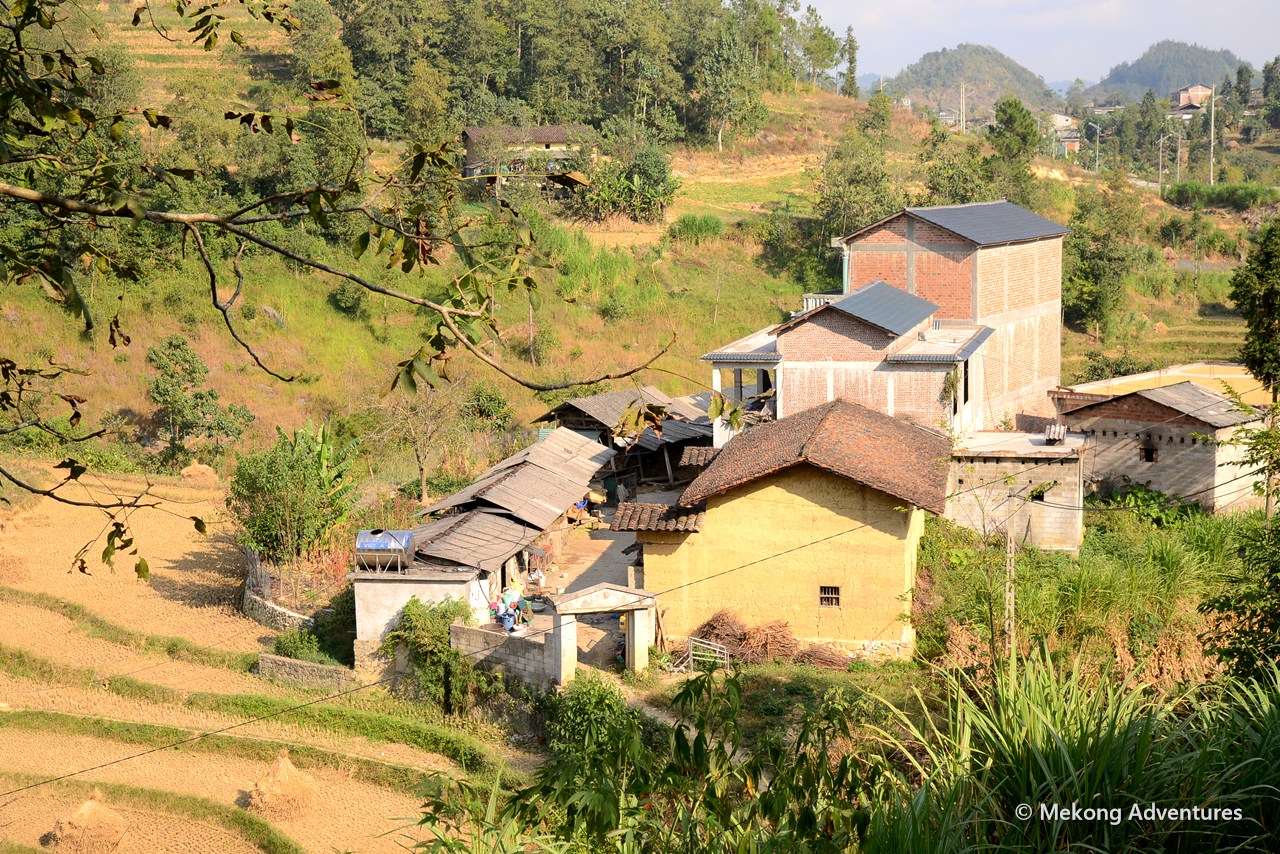
At the very top of Vietnam, just below the Lung Cu Flag Tower, there is a small Hmong village where almost every house is still built from pounded earth and roofed with old clay tiles. Then Pa village is quieter than its better-known neighbours, it sees far fewer visitors than the main stops on the Ha Giang Loop, and it is one of the best places in the far north to see how highland families have lived for generations.
This guide explains where Then Pa is, how to get there, what to see and do, where to stay and how to visit in a way that the village welcomes. Our photographs in this article were all taken in Then Pa.
Where Is Then Pa Village?
Then Pa (Thèn Pả in Vietnamese) is a hamlet of Lung Cu commune, in the far north of what travellers know as Ha Giang. It sits around 25 kilometres north of Dong Van town, on the Dong Van Karst Plateau, at the foot of Dragon Mountain, the peak crowned by the Lung Cu Flag Tower.
A note on names: in 2025 Vietnam reorganised its provinces and Ha Giang was merged into Tuyen Quang province, while the old districts such as Dong Van were dissolved. On the ground very little has changed, and guides, drivers and signposts still refer to the region as Ha Giang. When you plan your trip, Lung Cu, Dong Van and the Ha Giang Loop are still the names to look for.
Below Dragon Mountain lie two small freshwater ponds that local people call the Dragon’s Eyes. They are said never to dry up, even in the dry season. One sits close to Lo Lo Chai village, and the other close to Then Pa.
Why Visit Then Pa?
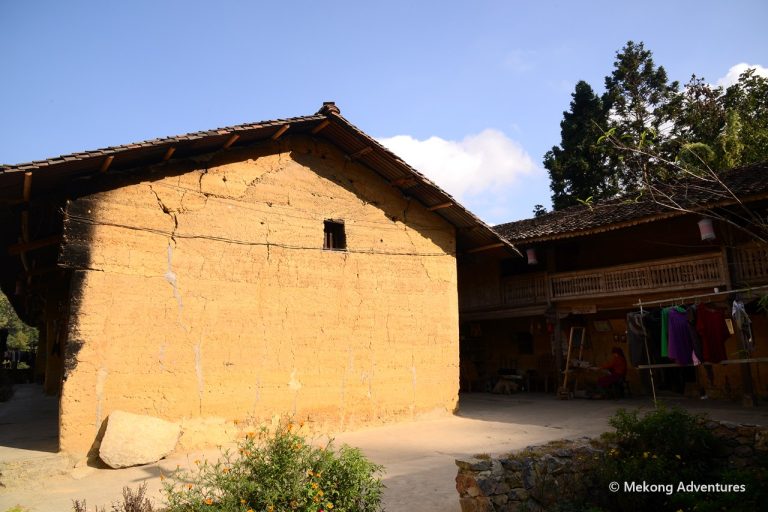
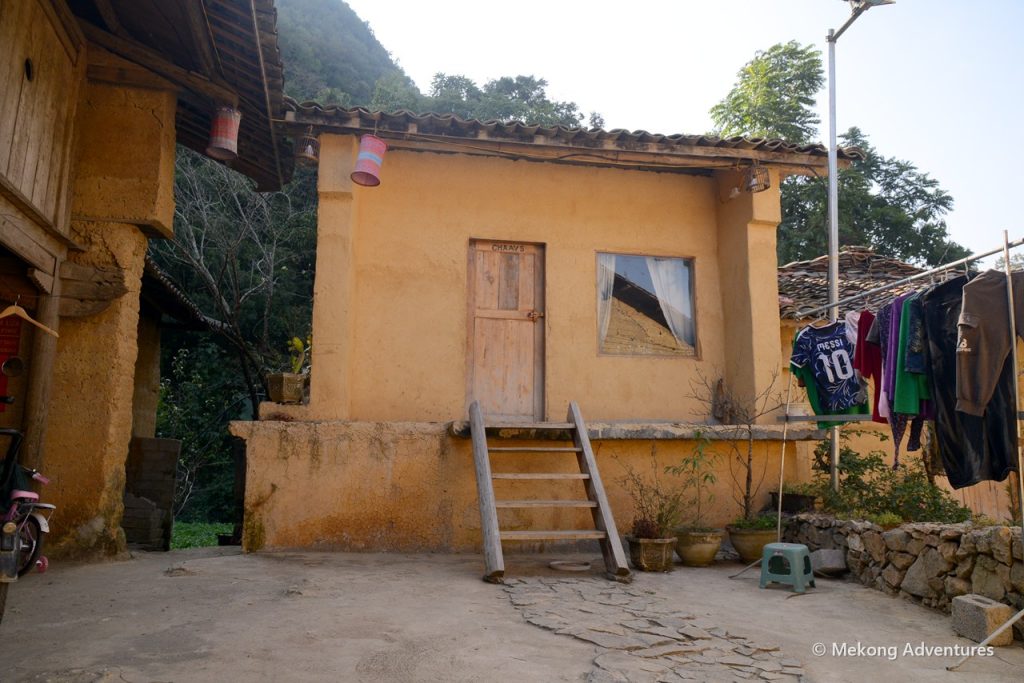
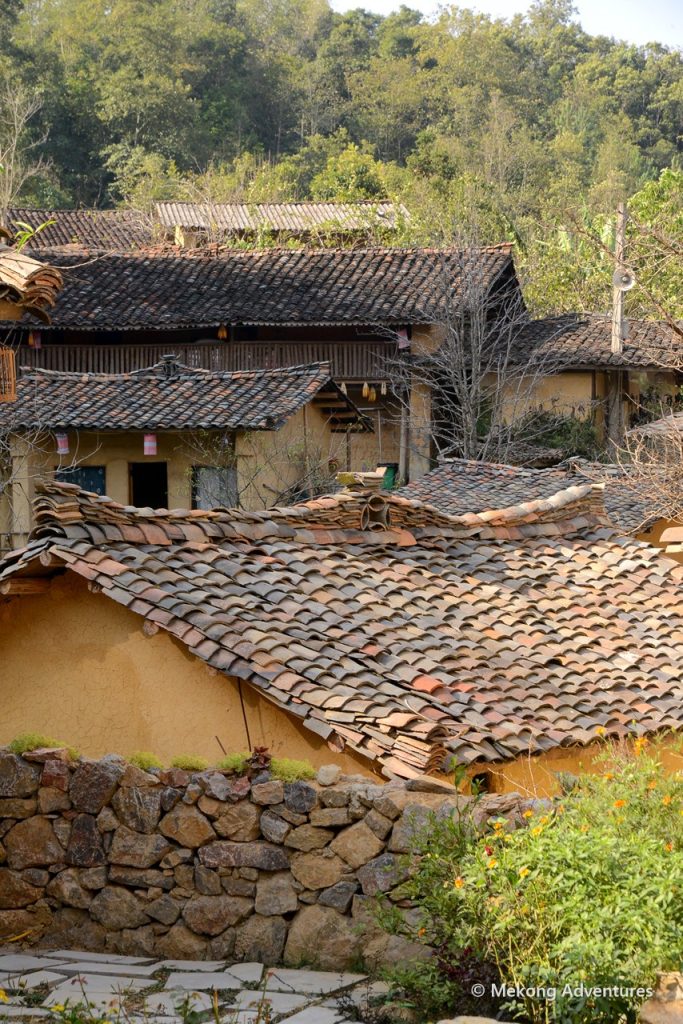
Many villages in Ha Giang have rammed-earth houses, but in Then Pa they are still the rule rather than the exception. Walk through the lanes and you pass yellow earthen walls, dry-stone fences, wooden doors darkened by smoke, and roofs of curved clay tiles laid in alternating rows.
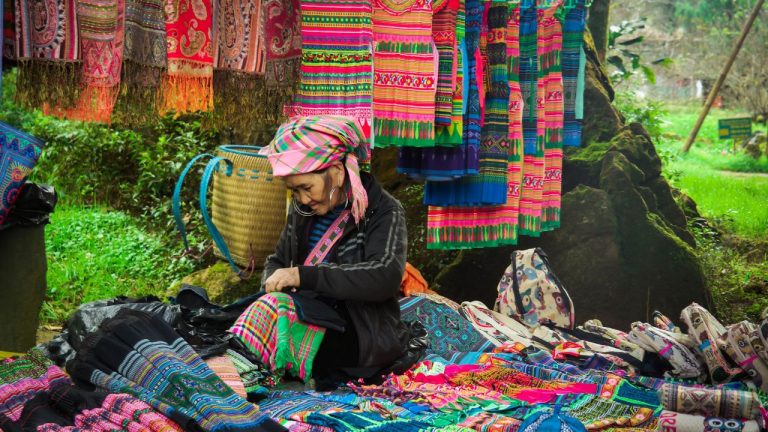
- A living Hmong village. People here wear their traditional clothes for everyday work, not for visitors. In one corner of the village, ten households belong to one extended Vang family, who have lived here for more than a century.
- Rammed-earth architecture. Thick earthen walls, yin-and-yang clay tiles and stone fences make Then Pa one of the most photogenic villages on the plateau. Read more in our guide to the Hmong rammed-earth houses of Then Pa.
- Calm. Then Pa is far less visited than nearby Lo Lo Chai, so mornings are quiet and you can walk the lanes without crowds.
- Location. The village is right below the Lung Cu Flag Tower, so you can watch sunrise from the tower and be back for breakfast in the village.
What to See and Do in Then Pa
Walk the village lanes
The best way to see Then Pa is simply to walk. At the entrance to the village, two rows of old Chinese fir trees, known locally as sa moc, stand tall and straight. These conifers are a symbol of the Dong Van plateau because they grow even in thin, rocky soil. From there, stone-paved lanes wind between the houses. Look out for corn hanging under the eaves, firewood stacked against walls for winter, and the small vegetable gardens behind stone fences.
See daily life and crafts
Depending on the season and time of day, you may see women weaving hemp cloth on wooden looms, families shelling and drying corn, or cattle being led out to graze. The rhythm is slow, and people mostly carry on with their work as you pass. We describe a typical day in A Slow Day in Then Pa.
Climb to the Lung Cu Flag Tower
The flag tower stands on the summit of Dragon Mountain, a few hundred steps above the road. Its giant national flag measures 54 square metres, one for each of Vietnam’s 54 ethnic groups. From the top, you look over the Then Van valley on one side and towards the upper Nho Que River on the other. Come early: sunrise is the most beautiful time and the steps are much cooler. The true northernmost marker of Vietnam is a short distance further on, and local drivers can take you there.
Find the Dragon’s Eye pond
The pond near Then Pa is small, but in summer, when the corn is green, the view of the water with the earthen houses behind is lovely. Ask a villager to point you in the right direction rather than walking across fields.
Our tip
Stay overnight if you can. Most travellers pass Lung Cu at midday, take a photo at the flag tower and drive on. If you sleep in or near Then Pa, you get the village in the soft early light, sunrise at the tower and an evening meal with a local family.
How to Get to Then Pa
From Hanoi, the road to Ha Giang city takes about six to seven hours by car or sleeper bus. From Ha Giang city, the route north via Quan Ba and Yen Minh to Dong Van and Lung Cu is one of the most dramatic drives in Southeast Asia, with high passes and limestone peaks. Most travellers cover it over two days, stopping overnight in Yen Minh or Dong Van.
- Private car with driver. The most comfortable option, especially for families and in the cold months. See our Ha Giang Loop by private car, 3 days, which stops at Lung Cu.
- Motorbike with an easy rider. You ride pillion behind an experienced local driver, which gives you the freedom of a motorbike without the risk of riding mountain roads yourself. See our Ha Giang Loop with easy riders, 4 days.
- Self-drive. Only for experienced riders. The roads are steep, narrow and busy with trucks, and the weather changes quickly.
Foreign visitors have traditionally needed a border-area permit for the far north of Ha Giang. Rules change, so ask your hotel in Ha Giang or your tour operator about the current requirements before you go.
Where to Stay
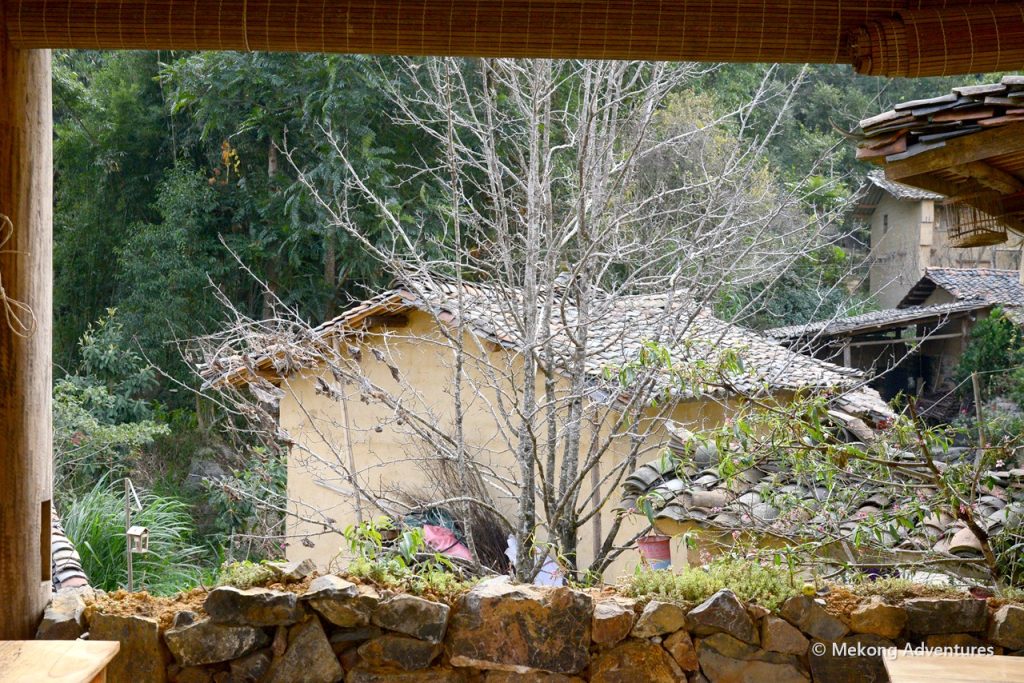
Since around 2021, several traditional houses in Then Pa have been restored in their original style and opened as simple homestays, with local dishes such as thang co (a rich highland stew), black-chicken hotpot and men men, steamed ground corn that was once the everyday staple of the plateau. Rooms are basic, nights are cold for much of the year and hot water depends on the weather, but the setting is unforgettable.
If you prefer more comfort, stay in Dong Van town, which has a wider range of hotels, and visit Then Pa on a day trip. Compare the two nearest villages in Then Pa or Lo Lo Chai?.
When to Go
Then Pa is beautiful all year. Spring brings pear and peach blossom, summer green corn and clear water in the Dragon’s Eye pond, autumn ripening rice, and winter morning mist that hangs over the roofs. Each season has its own trade-offs, which we explain in Then Pa Through the Seasons.
Visiting Respectfully
- Ask before you photograph people, and accept a shake of the head with a smile.
- Do not enter a house or courtyard unless you are invited. A green branch hung at a gate often means a family ceremony is taking place.
- Do not hand out sweets or money to children. If you want to help, buy directly from the family that hosts you.
- Keep noise and drones away from homes, especially early in the morning.
Frequently Asked Questions
Where is Then Pa village?
In Lung Cu commune, in the far north of the Ha Giang region, at the foot of Dragon Mountain below the Lung Cu Flag Tower, around 25 km north of Dong Van town.
Which ethnic group lives in Then Pa?
Then Pa is a Hmong village. Nearby Lo Lo Chai is home to the Lo Lo people.
Can I stay overnight in Then Pa?
Yes. Several restored rammed-earth houses offer simple homestay rooms and home-cooked meals. For more comfort, stay in Dong Van town.
How long should I spend in Then Pa?
Half a day is enough to walk the village and climb the flag tower. One night lets you see the village at sunrise and in the evening, when it is at its most peaceful.
Is Then Pa on the Ha Giang Loop?
It lies on the northern edge of the loop, close to the Lung Cu Flag Tower, which most Ha Giang Loop itineraries already visit.
Plan Your Ha Giang Trip With Us
Visit Then Pa and the Lung Cu Flag Tower on a private Ha Giang journey with a local guide, by car or with easy riders.