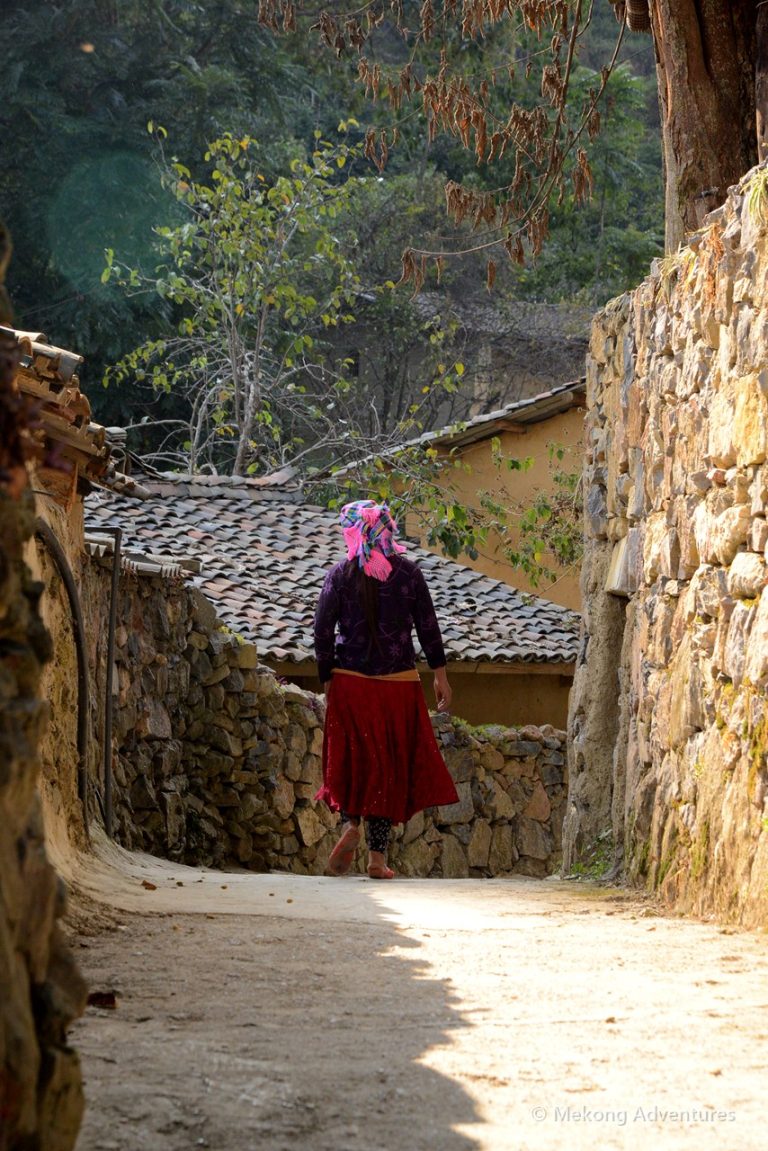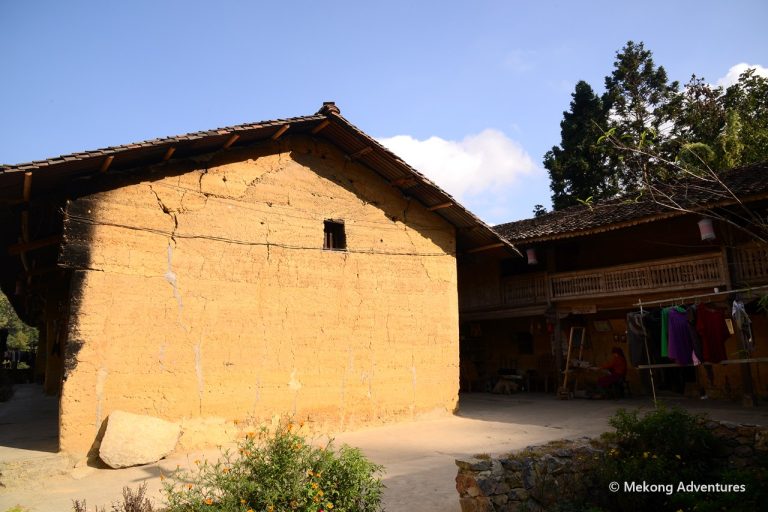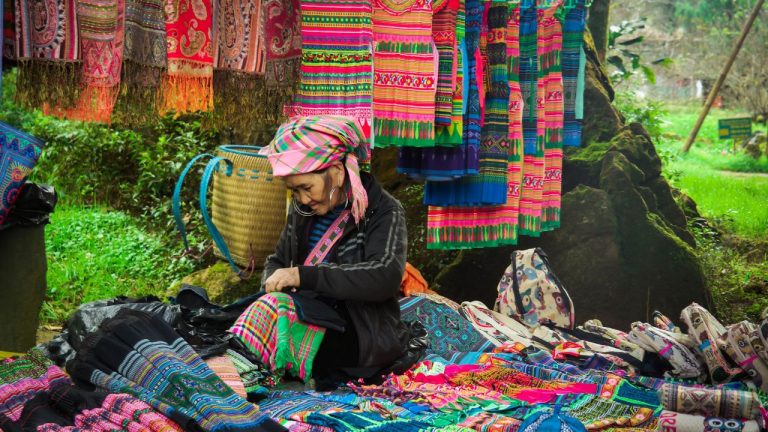
In Then Pa, a small Hmong village at the foot of the Lung Cu Flag Tower, the day does not start with traffic or alarms. It starts with roosters, the smell of wood smoke and the first light on the earthen walls. Life here still follows the seasons, the fields and the animals, and if you spend a day in the village you begin to understand how families have made a home on one of the harshest landscapes in Vietnam.
This is a portrait of an ordinary day in Then Pa, based on what visitors can see when they walk the village. Every household is different, and the rhythm changes with the season, but the picture below will help you know what to look for. For practical information about the village itself, start with our Then Pa village guide.
Early Morning: Fire, Mist and Animals
Before sunrise, the first job in most homes is the fire. The hearth is the warm heart of a Hmong house, and on the Dong Van plateau, where winter nights can fall close to freezing, the fire is kept going from early morning. A kettle goes on, and a pot of corn or rice is prepared for the family and the animals.
In the cold months, the village is often wrapped in mist at dawn. The roofs appear and disappear, and smoke drifts out between the clay tiles, because many traditional houses have no chimney. It is one of the most atmospheric moments to walk through Then Pa, but bring a warm jacket.
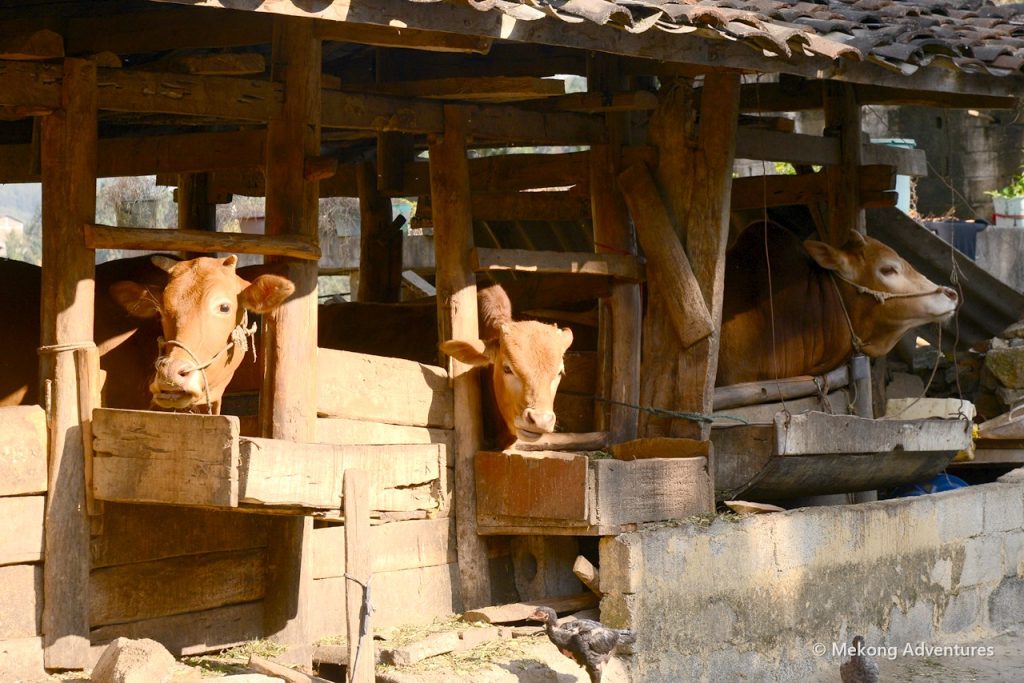
Next come the animals. Many families keep cattle, pigs and chickens close to the house, and cattle in particular are a family’s most valuable possession. In the morning, they are fed and then often led out to graze on the hillsides or along the paths at the edge of the village.
Morning to Midday: Fields and Daily Work
Farming on the karst plateau is hard work. Soil collects in pockets between the grey rocks, and families plant corn in these small patches, often building stone walls to keep the earth in place. Depending on the season, you may see people planting, weeding, harvesting or carrying heavy baskets of corn or grass for the animals on their backs.
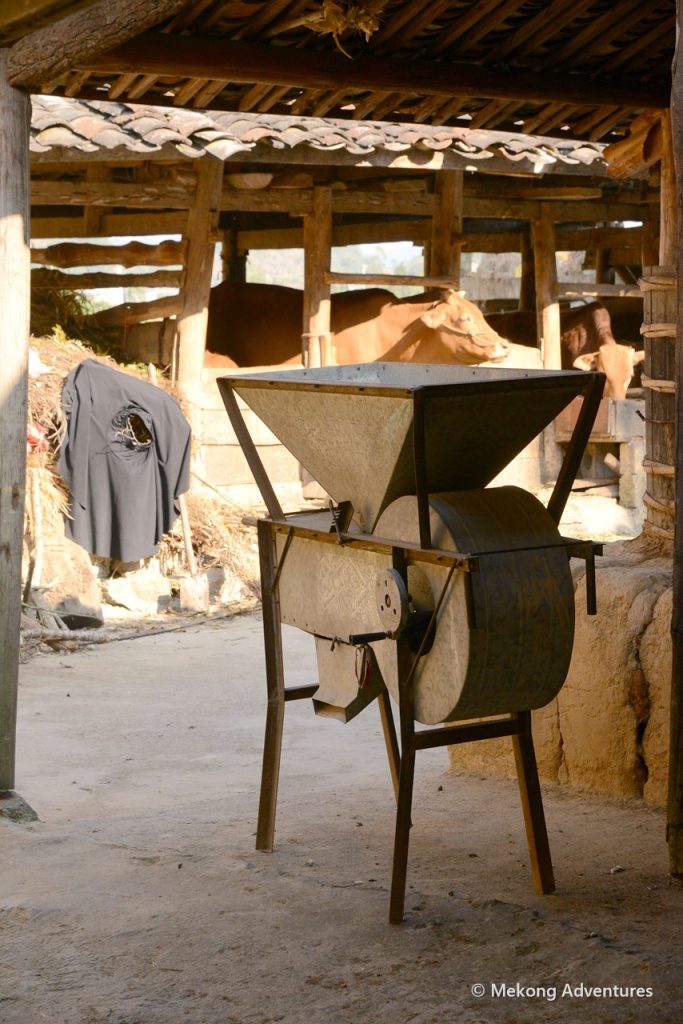
Back at home, there is always work to do around the house. Corn is shelled and dried, firewood is cut and stacked against walls ready for winter, and grain is cleaned. In some courtyards you will see wooden, hand-cranked winnowing machines, used to separate the grain from the chaff, a simple but clever tool that has been used in the mountains for generations.
Afternoon: Weaving and Craft
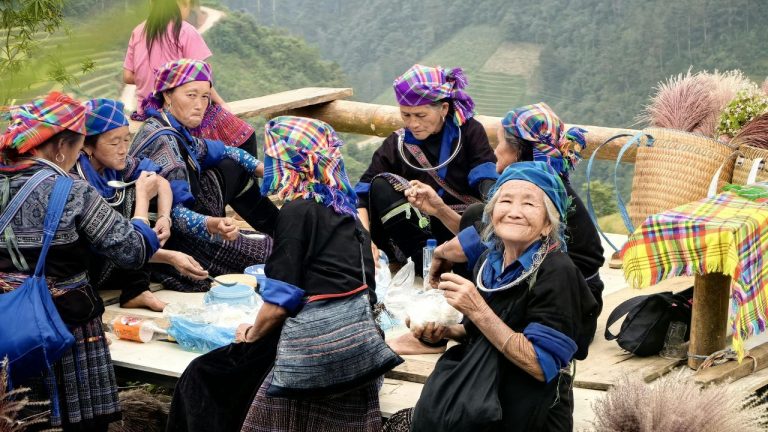
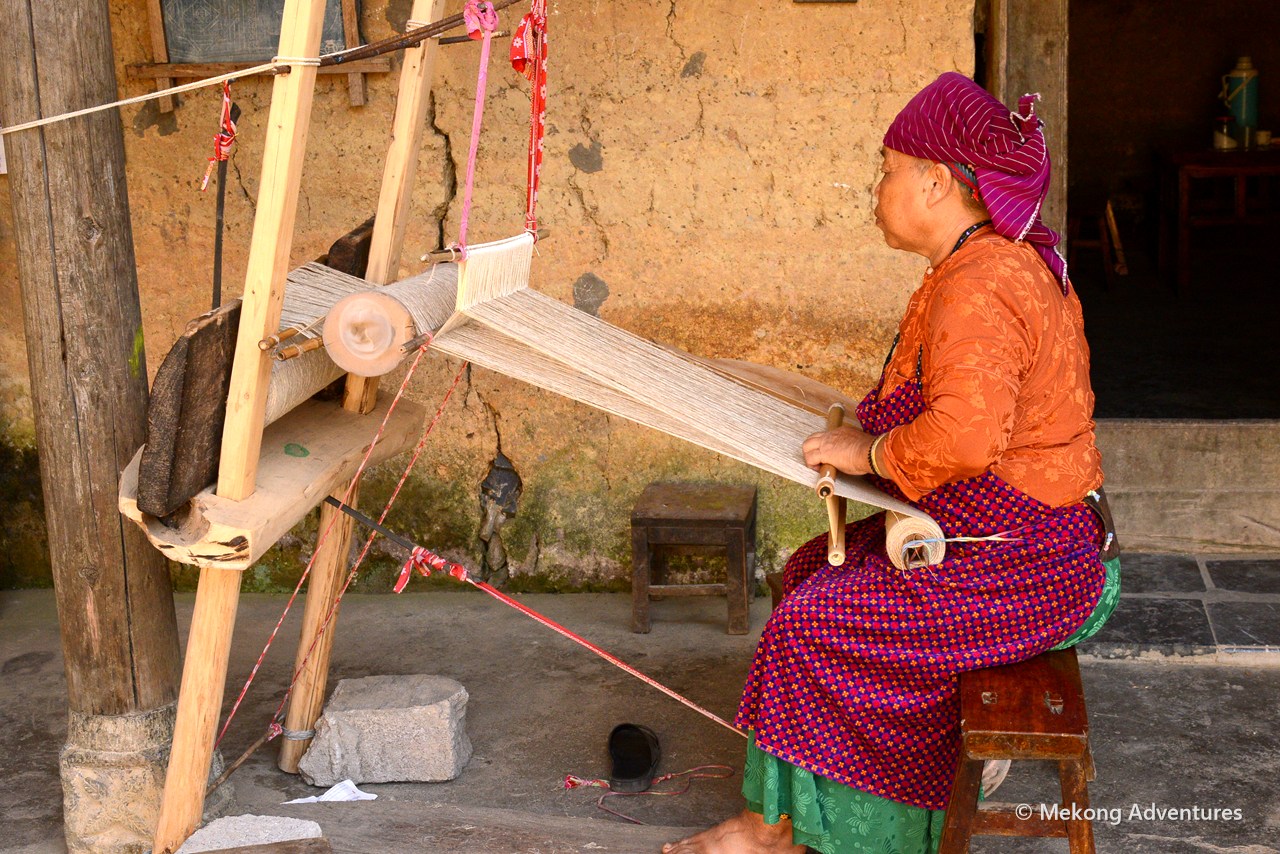
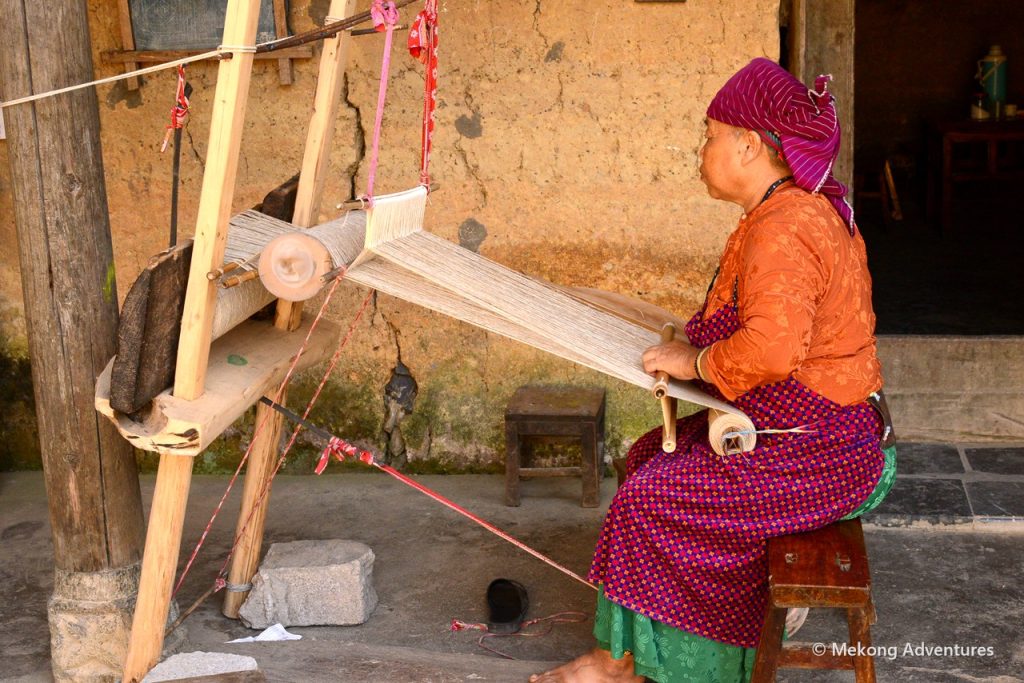
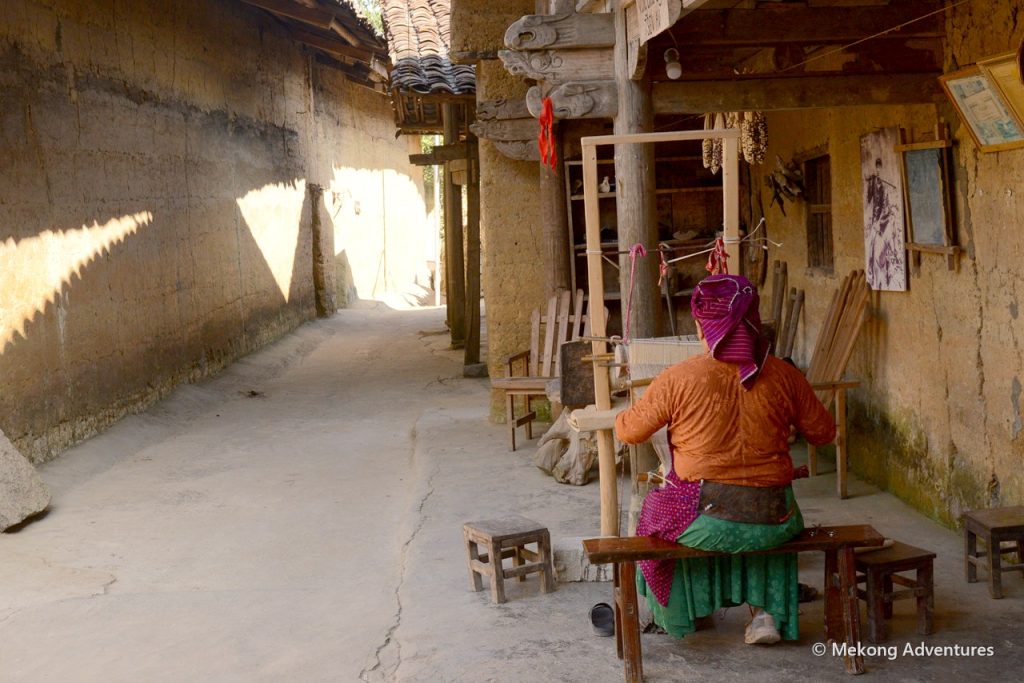
For Hmong women, textiles are much more than clothing. Traditionally, hemp is grown, cut and dried, its fibre is split by hand into long threads, then twisted, spun and woven on a wooden loom into narrow strips of cloth. The cloth is often dyed with indigo, and decorated with batik made by drawing patterns in hot beeswax, or with embroidery. The whole process from plant to finished skirt can take many months.
In Then Pa you may see women working at their looms in a courtyard or under the eaves, where the light is good. Weaving takes concentration, so watch quietly and ask before taking a photograph. If you would like to buy a piece of cloth, ask your host whether anyone in the village sells their work, and buy directly from the person who made it.
Evening: Family and Food
As the light fades, the animals are brought back, the fire is built up again and the family gathers to eat. A traditional highland meal might include men men, which is ground corn steamed until fluffy, eaten with vegetables from the garden, pork or chicken, and soup. On special occasions you might be offered thang co, a rich stew traditionally made with horse meat and offal, and corn wine. Some homestays in the village also serve black-chicken hotpot, a speciality of the mountains.
Evenings are quiet, and nights are dark and full of stars. If you stay in a homestay, this is the best time to talk with your hosts, with your guide translating, about the house, the family and the changes the village has seen.
Our tip
If you are offered corn wine, it is polite to accept a small sip, but you do not have to keep drinking. Cover your glass with your hand and say thank you when you have had enough.
Markets and Celebrations
For many families on the plateau, the week is shaped by the market. People walk or ride to the weekly markets in nearby towns to sell animals and produce, buy tools and supplies and meet friends. The Sunday market in Dong Van is the best known in the area. Read more about the markets of the north in our guide to Bac Ha and the highland markets of northern Vietnam.
The biggest celebration of the year is the Lunar New Year. Hmong communities celebrate with family gatherings, visits, food and traditional games. If you travel at this time, remember that it is a family holiday and many services close for several days.
A Village That Is Changing
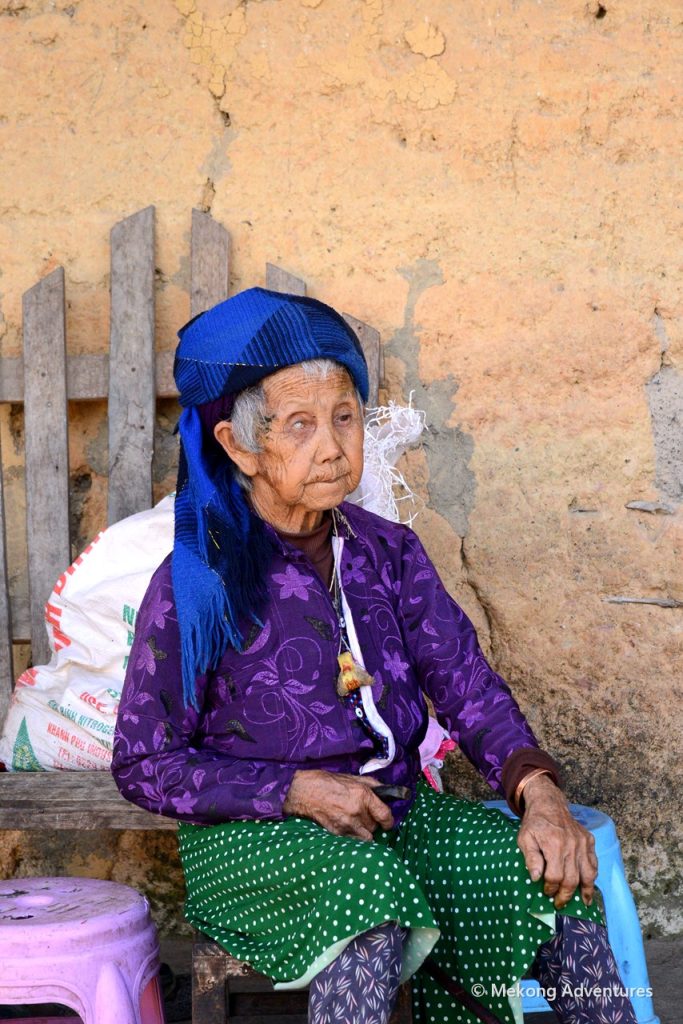
Like everywhere in the mountains, Then Pa is changing. Young people move to the cities for work, roads and electricity have reached the village, and since around 2021 some families have restored their houses as homestays. Tourism brings new income, but it also brings new pressures. As a visitor, you can help by staying with local families, eating local food, buying directly and treating the village as a home, not a film set.
How to Experience Village Life Respectfully
- Go with a local guide. A guide can translate, explain what you are seeing and introduce you to families who are happy to welcome visitors.
- Ask before photographing people, especially the elderly and children, and respect a no.
- Do not enter houses or animal sheds uninvited. A green branch at a gate often means a ceremony and no visitors.
- Do not give sweets or money to children. It encourages begging and is bad for their teeth.
- Stay overnight rather than passing through in an hour. Village life only shows itself slowly.
Frequently Asked Questions
What do people in Then Pa do for a living?
Most families farm corn and other crops on the rocky plateau, raise cattle, pigs and chickens, and some now run homestays and small local restaurants.
Can I see weaving in Then Pa?
Often, yes. Hmong women weave hemp cloth on wooden looms at home. Ask your guide or host, and always ask before photographing someone at work.
What food will I eat in a Then Pa homestay?
Typically home-cooked dishes such as men men (steamed ground corn), vegetables, pork or chicken and soup. Thang co stew and black-chicken hotpot are local specialities.
Is it appropriate to visit a working village as a tourist?
Yes, if you visit respectfully: go with a local guide, ask before photographing, stay with local families and buy directly from the people who make things.
See Highland Village Life With Us
Spend time in Hmong villages such as Then Pa on a private journey around Ha Giang with a local guide.