Ask anyone who has been to Vietnam about Hanoi and they will probably mention the food. The capital has its own cooking style, lighter and more subtle than the south, built on clear broths, fresh herbs, rice noodles and grilled meats, and much of the best food is cooked on the pavement by families who have made the same dish for decades.
This guide to Hanoi street food lists 15 dishes we think every visitor should try, explains how and when locals eat them, and shares practical tips on ordering, prices and hygiene. Eating in Hanoi is a joy once you know where to start.
How street food works in Hanoi
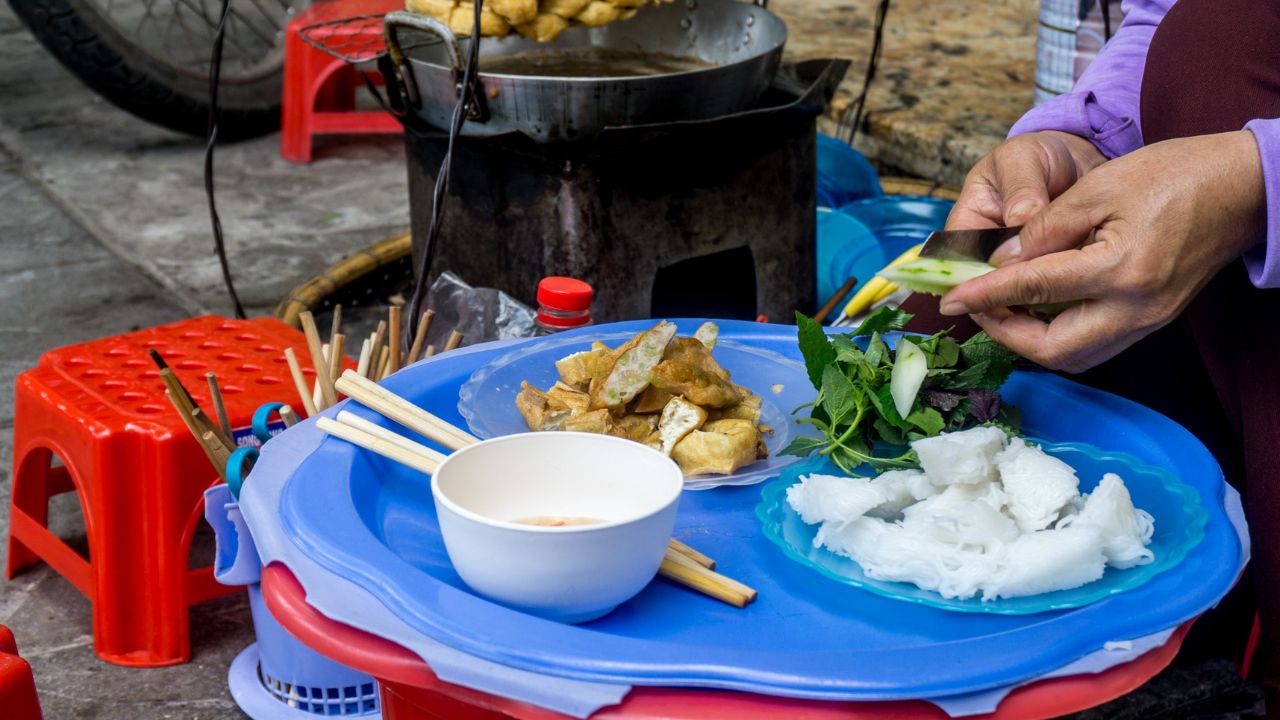
Most street food stalls in Hanoi specialise in a single dish. If a place sells bun cha, it sells only bun cha, and probably has for years. Menus are often a sign on the wall with the name of the dish and one or two options. You sit on low plastic stools, the food arrives quickly, and you pay when you leave.
Many dishes are eaten at certain times of day. Pho and banh cuon are breakfast foods, bun cha is a lunchtime favourite and many stalls close once the pot is empty. The busiest stalls are usually the best and the safest, because the food turns over quickly.
15 Hanoi dishes you should try
Noodle soups
- Pho bo – Hanoi’s most famous dish: rice noodles in a clear beef broth scented with star anise and cinnamon, topped with sliced beef and spring onions. Best for breakfast.
- Bun rieu – A tangy noodle soup with tomato and a soft cake of crab paste, often with tofu and fresh herbs.
- Bun thang – An elegant soup of thin rice noodles with shredded chicken, egg, pork and a delicate broth, traditionally made from leftovers after Tet.
- Bun moc – Noodles in a light pork broth with meatballs and mushrooms, a gentle option for sensitive stomachs.
Grilled and fried dishes
- Bun cha – Grilled pork patties and slices served in a sweet and sour dipping sauce with rice noodles and herbs. The lunchtime classic of Hanoi.
- Cha ca – Turmeric-marinated fish fried at your table with dill and spring onions, eaten with noodles, peanuts and shrimp paste.
- Nem ran – Hanoi-style fried spring rolls, crisp and filled with pork, mushrooms and glass noodles.
- Banh tom – Crispy sweet potato and shrimp fritters, traditionally eaten by the shores of West Lake.
Rice and rolls
- Banh cuon – Silky steamed rice rolls filled with minced pork and wood ear mushrooms, topped with fried shallots. A favourite breakfast.
- Xoi – Sticky rice with toppings such as mung bean, fried shallots, chicken or pate, sold on street corners in the morning.
- Banh mi – Vietnam’s famous baguette sandwich. Hanoi versions are often simpler than in the south, with pate, cold cuts or grilled meat.
Sweets and drinks
- Ca phe trung (egg coffee) – Strong Vietnamese coffee topped with a thick, sweet cream of whipped egg yolk and condensed milk, invented in Hanoi in the 1940s.
- Che – Sweet soups and desserts made with beans, jellies, fruit and coconut milk, served hot in winter and with ice in summer.
- Kem Trang Tien – Simple, old-fashioned ice cream from a famous shop near the Opera House, a Hanoi institution for generations.
- Bia hoi – Light, fresh draught beer brewed daily and served on street corners, best enjoyed with friends and a plate of peanuts.
Our tip
Follow the locals. A stall full of office workers at lunchtime or families at breakfast is almost always a good sign. If you cannot decide, point at what the next table is eating; it is perfectly polite.
Where to eat
The Old Quarter is the easiest place to start, with hundreds of stalls packed into a few streets. Ta Hien and the streets around Dong Xuan market are busy in the evening, while the lanes around Hang Bac and Hang Buom are good for breakfast and lunch. For a quieter experience, explore the side streets of the French Quarter and the area around Truc Bach and West Lake.
Some stalls have become famous over the years, and you will see long queues for certain pho and bun cha shops. They are often excellent, but many smaller places nearby are just as good and far less crowded.
How to order and pay
- Most stalls serve one dish; simply sit down and hold up fingers for the number of portions.
- If there are options, they are usually written on the sign: for pho, for example, tai (rare beef) or chin (well-done beef).
- Prices are low, usually from about 30,000 to 70,000 dong per dish at street stalls. Have small notes ready.
- Pay when you leave. Tipping is not expected at street stalls.
- Fresh herbs, chilli, lime and garlic vinegar are on the table; add them to taste.
Is street food safe?
Street food in Hanoi is generally safe and is eaten by millions of people every day. Choose busy stalls where food is cooked fresh in front of you, avoid dishes that have been sitting out for a long time and drink bottled water. If you have a sensitive stomach, start with cooked dishes like pho and banh cuon before trying raw herbs and salads. Ice in restaurants and cafes is made from filtered water and is usually fine.
Vegetarian options
Vietnamese Buddhist cuisine has a long vegetarian tradition, and Hanoi has many vegetarian restaurants, often near pagodas. At street stalls, look for xoi with mung bean, banh mi with egg, fried tofu with tomato sauce and che. Learn the phrase toi an chay, meaning I eat vegetarian, and show it to the cook.
Try a food tour or cooking class
A street food walk with a local guide is one of the best ways to discover Hanoi. Your guide knows which stalls are good, explains each dish and how to eat it, and takes you into lanes you would never find alone. A cooking class, starting with a market visit, is another great way to learn about the ingredients. Both are easy to add to our Hanoi tours and our Hanoi travel guide has more ideas.
Frequently Asked Questions
What is the most famous food in Hanoi?
Pho bo, the beef noodle soup, and bun cha, grilled pork with noodles, are the two dishes Hanoi is most famous for. Egg coffee is the city’s signature drink.
When is the best time to eat street food in Hanoi?
Early morning for pho, banh cuon and xoi, lunchtime for bun cha, and evening for grilled dishes, hot pots and bia hoi.
How much does street food cost in Hanoi?
Most dishes at street stalls cost roughly 30,000 to 70,000 dong. Sit-down restaurants are more expensive.
Can I find vegetarian food in Hanoi?
Yes. There are many vegetarian restaurants near pagodas, and street dishes such as xoi with mung bean and fried tofu are easy to find.
Plan Your Trip With Us
Taste Hanoi with a local guide on a street food walk, or add a cooking class to your trip.