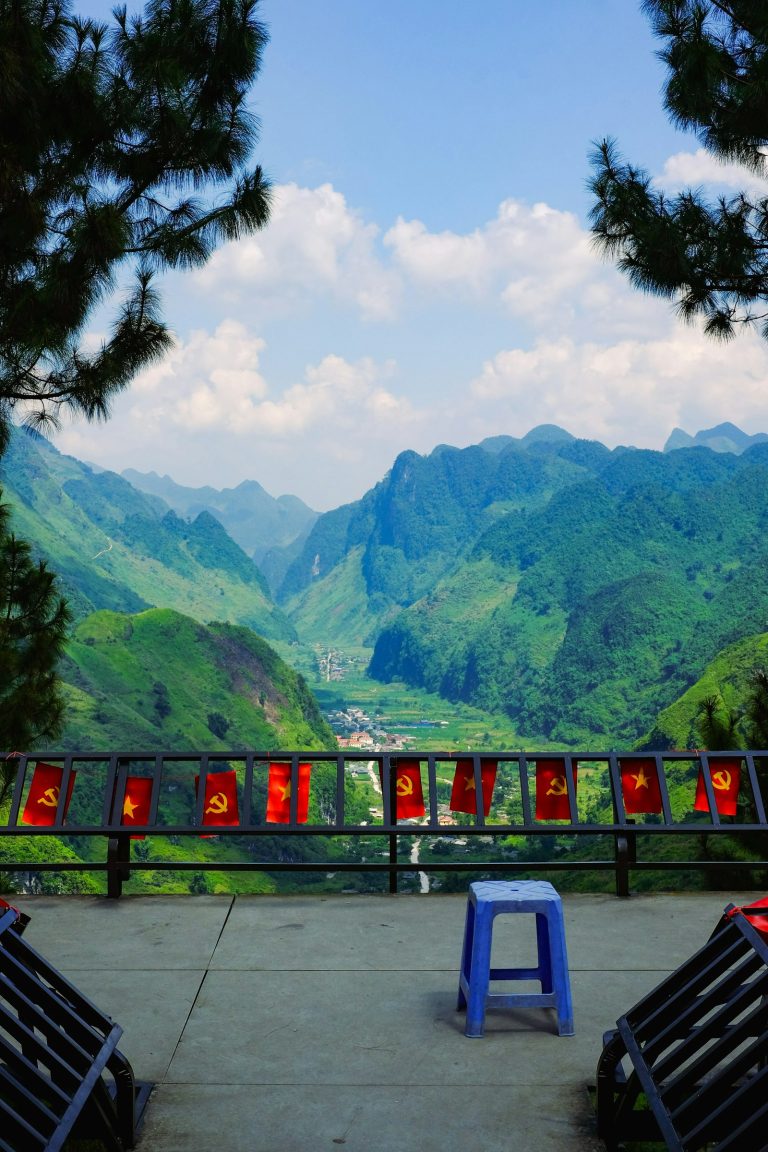
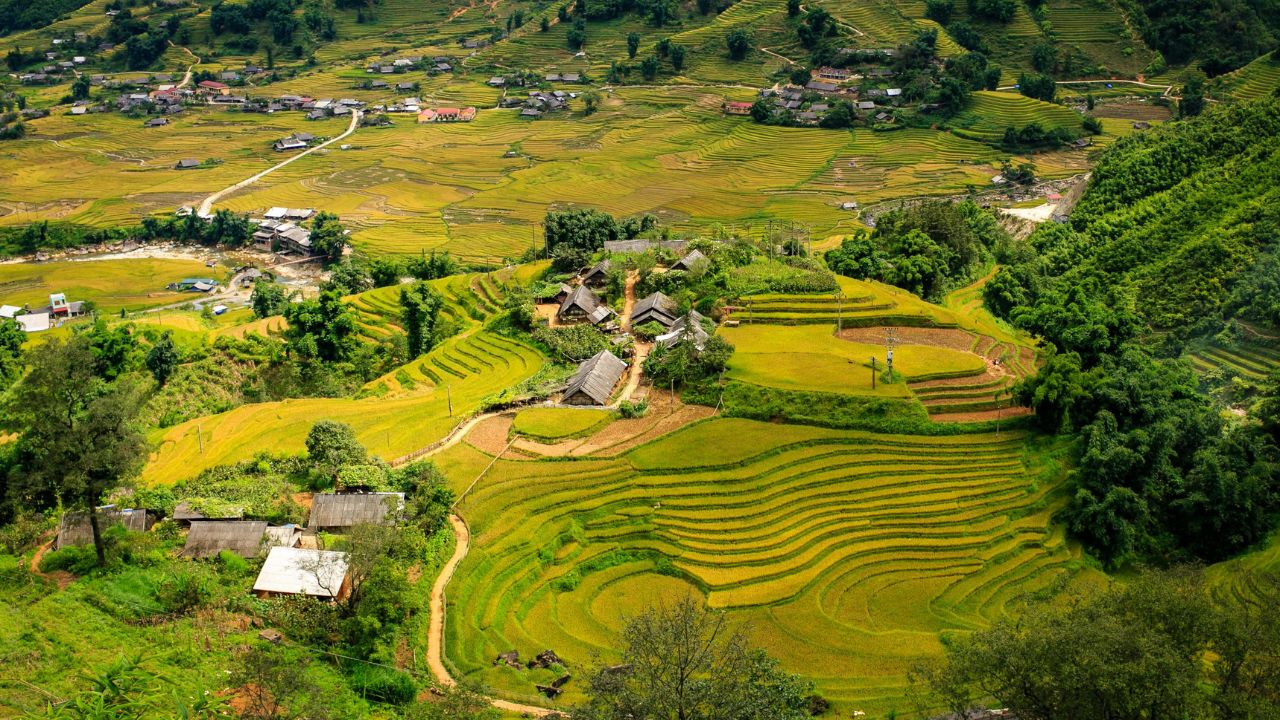
Sapa is the most famous mountain destination in Vietnam. Perched at around 1,500 metres in the Hoang Lien Son range, close to the Chinese border, it overlooks valleys of hand-carved rice terraces and the villages of the Hmong, Dao, Giay and Tay peoples. Above it all rises Fansipan, at 3,143 metres the highest peak in Indochina.
This Sapa travel guide explains how to get there, the best time to visit, which villages and treks to choose, where to stay and how to avoid the crowds. Whether you have two days or a week, it will help you plan your time in the mountains.
Getting to Sapa from Hanoi
- By limousine bus or private car: about 5 to 6 hours on the highway to Lao Cai, then up the mountain road. The fastest and most popular option.
- By night train: the train from Hanoi to Lao Cai takes about eight hours overnight in a shared sleeper cabin, followed by an hour’s drive up to Sapa. Slower, but a classic experience.
- Combined with other regions: Sapa can be linked by road with Mu Cang Chai, Ha Giang or Bac Ha.
When to visit Sapa
| Season | Months | What to expect |
|---|---|---|
| Spring | March to May | Mild, flowers, terraces filled with water |
| Summer | June to August | Warm, green, rainy afternoons |
| Harvest | September to early October | Golden terraces, clear skies |
| Winter | November to February | Cold, misty, occasional frost |
The rice terraces are at their most photogenic just before the harvest, usually from mid-September to early October. Spring and autumn are the most comfortable for trekking. Winter can be cold, with temperatures close to freezing at night, but the mist and the quiet have their own charm. See our guide to the best time to visit Vietnam.
Sapa town
Sapa town has grown fast and is now busy with hotels, restaurants and shops. It is a convenient base, with a small lake, a stone church from the French period and a lively market, but the real beauty of Sapa is in the valleys around it. Plan to spend most of your time outside the town.
The best villages and treks
Muong Hoa valley: Lao Chai and Ta Van
The classic walk follows the Muong Hoa valley from Lao Chai, a Black Hmong village, to Ta Van, home of the Giay people, with terraces on both sides and Fansipan in the background. It is about 10 to 12 kilometres, mostly downhill, and suitable for most walkers. It is also the busiest route, so start early.
Cat Cat
The closest village to town, reachable on foot in 20 minutes. It is very touristy now, but easy and pretty, with a waterfall and traditional houses. Good for a short walk on arrival day.
Ta Phin
A village of the Red Dao people, known for their red headscarves, fine embroidery and herbal baths made with forest plants. A gentle walk through terraces leads there from the road.
Quieter valleys
For fewer crowds, head to Sa Seng and Hau Thao, Su Pan and Giang Ta Chai, or further to Nam Toong and Ban Ho. These trails cross forest, streams and suspension bridges and pass villages that see few visitors. Our Sapa Off The Beaten Track trek explores this side of Sapa.
Fansipan
You can reach the summit of Fansipan by a funicular and cable car from Sapa town, followed by a climb up a few hundred steps to the top. On a clear day the views over the Hoang Lien Son range are spectacular; bring a warm jacket, as it is much colder at the top. Experienced hikers can also climb Fansipan on foot over one or two days with a licensed guide.
Homestay or hotel?
A night in a village homestay is one of the highlights of a visit to Sapa: dinner with a Hmong, Dao or Giay family, a quiet evening in the valley and a sunrise over the terraces. Facilities are simple, so many travellers combine one homestay night with a comfortable hotel in town. Read our guide to staying in a homestay.
Our tip
Hire a local guide from one of the ethnic communities. They know the trails, the families and the stories of each village, and your money goes directly to the people who live here.
Responsible visiting
- Ask before photographing people, especially children.
- Avoid giving sweets or money to children; support schools and families through fair purchases instead.
- Buy handicrafts directly from the women who make them, and bargain politely.
- Stay on the paths and respect the rice fields, which are people’s livelihood.
What to pack
Good walking shoes, a rain jacket, warm layers for the evenings and a small daypack are essential. Our Sapa trekking packing list has the full checklist.
Where to stay in Sapa
Sapa has accommodation for every budget. In town, you find everything from simple guesthouses to large resorts, many with mountain views; choose a room facing the valley rather than the street. In the Muong Hoa valley, around Ta Van and Lao Chai, small eco-lodges and homestays offer peace and terrace views just outside the town.
For a first visit, a good combination is one night in a comfortable hotel in town, to rest after the journey from Hanoi, and one night in a village homestay or lodge, to experience the valley in the evening and early morning.
Markets around Sapa
Weekly markets are a colourful way to meet the people of the mountains. The most famous is Bac Ha, about two to three hours from Sapa, held on Sunday mornings, where Flower Hmong women in bright embroidered clothes trade textiles, buffalo, horses and vegetables. Smaller markets, such as Can Cau on Saturday, are less visited. In Sapa town itself, the daily market is a good place to see local produce and handicrafts.
Food to try in Sapa
The cold climate brings its own specialties. Try grilled meats and vegetables from the street barbecues, rice cooked in bamboo tubes, hot pots with mountain vegetables, and salmon and sturgeon farmed in the cold streams of the area. In the villages, home-cooked meals with corn, rice and fresh greens are simple and delicious.
Frequently Asked Questions
How many days do I need in Sapa?
Two to three days is ideal: one day for an easy walk and the town, one for a longer trek, and ideally one night in a homestay.
Is Sapa worth visiting?
Yes. The town is busy, but the valleys, terraces and villages around it are among the most beautiful landscapes in Vietnam.
Can I visit Sapa without trekking?
Yes. Short walks to Cat Cat, the Fansipan cable car and drives to viewpoints let you enjoy Sapa without long hikes.
How cold does Sapa get?
From December to February, nights can drop close to freezing. Bring warm clothes in winter.
Plan Your Trip With Us
From easy walks and the Fansipan cable car to multi-day treks and homestays, find the Sapa trip that suits you.