Travelling by train is one of the most memorable ways to see Vietnam. The North-South Railway, often called the Reunification Express, runs for around 1,700 kilometres between Hanoi and Saigon, along coasts, rice fields and mountain passes, and the night train to Lao Cai is the classic way to reach Sapa. Trains are slower than flights, but the journey becomes part of the adventure.
This guide to Vietnam train travel explains the main routes, ticket classes, how to book, what to expect on board and when the train is a better choice than flying.
The main train routes
| Route | Approximate time | Highlights |
|---|---|---|
| Hanoi to Saigon (full line) | About 30 to 36 hours | The whole country from north to south |
| Hanoi to Hue | About 12 to 14 hours | Overnight journey, rice fields at dawn |
| Hue to Da Nang | About 2.5 to 3 hours | Coastal views around the Hai Van headland |
| Da Nang to Nha Trang | About 9 to 10 hours | Coast and countryside |
| Hanoi to Lao Cai (for Sapa) | About 8 hours | Overnight sleeper to the mountains |
Times vary by train and timetable, so check the current schedule before booking.
The most scenic stretch: Hue to Da Nang
If you only take one train in Vietnam, make it the short ride between Hue and Da Nang. The line follows the coast around the Hai Van headland, with views of beaches, fishing villages and jungle-covered mountains dropping into the sea. Sit on the left side heading south, or the right side heading north, for the best sea views. Read more in our Hue destination guide.
The night train to Sapa
The overnight train from Hanoi to Lao Cai leaves in the evening and arrives early the next morning, from where it is about an hour by road up the mountain to Sapa. Several companies run private carriages with comfortable four-berth cabins attached to the regular trains. It is a classic experience, though many travellers now choose the faster limousine bus or a private car on the highway. See our Sapa destination page.
Classes of travel
- Soft sleeper: four berths in a closed cabin with air-conditioning, the most comfortable choice for night trains.
- Hard sleeper: six berths in three levels, cheaper and more crowded; the top bunk is quite high.
- Soft seat: air-conditioned reclining seats, good for short daytime journeys like Hue to Da Nang.
- Hard seat: basic wooden or plastic seats, best avoided for long trips.
- Private carriages: on some routes, private companies operate upgraded cabins with better bedding and service.
Our tip
For a night train, book a lower berth in a soft sleeper cabin if you can. Lower berths have more space for luggage and are easier to get in and out of, and you can book the whole cabin for your group or family.
How to book
Tickets can be bought at stations, through the official Vietnam Railways website and through reputable agents. Trains are busy around Tet and national holidays, so book well in advance at those times. Bring your passport when travelling, as ticket names may be checked.
On board
- A food trolley passes with noodles, rice dishes, snacks and drinks, but bringing your own snacks and fruit is a good idea.
- Toilets are basic; bring tissues and hand sanitiser.
- Air-conditioning can be strong, so keep a warm layer handy.
- Keep valuables with you, especially at night.
- Luggage goes under the lower berths or on the shelves above the door.
Train or plane?
For long distances such as Hanoi to Saigon, flying takes about two hours compared with well over a day by train, so most travellers fly. The train makes sense for shorter scenic stretches like Hue to Da Nang, for overnight journeys that save a hotel night, and for travellers who enjoy slow travel and watching the countryside go by. Many of our itineraries combine short flights with one memorable train ride.
Train Street in Hanoi
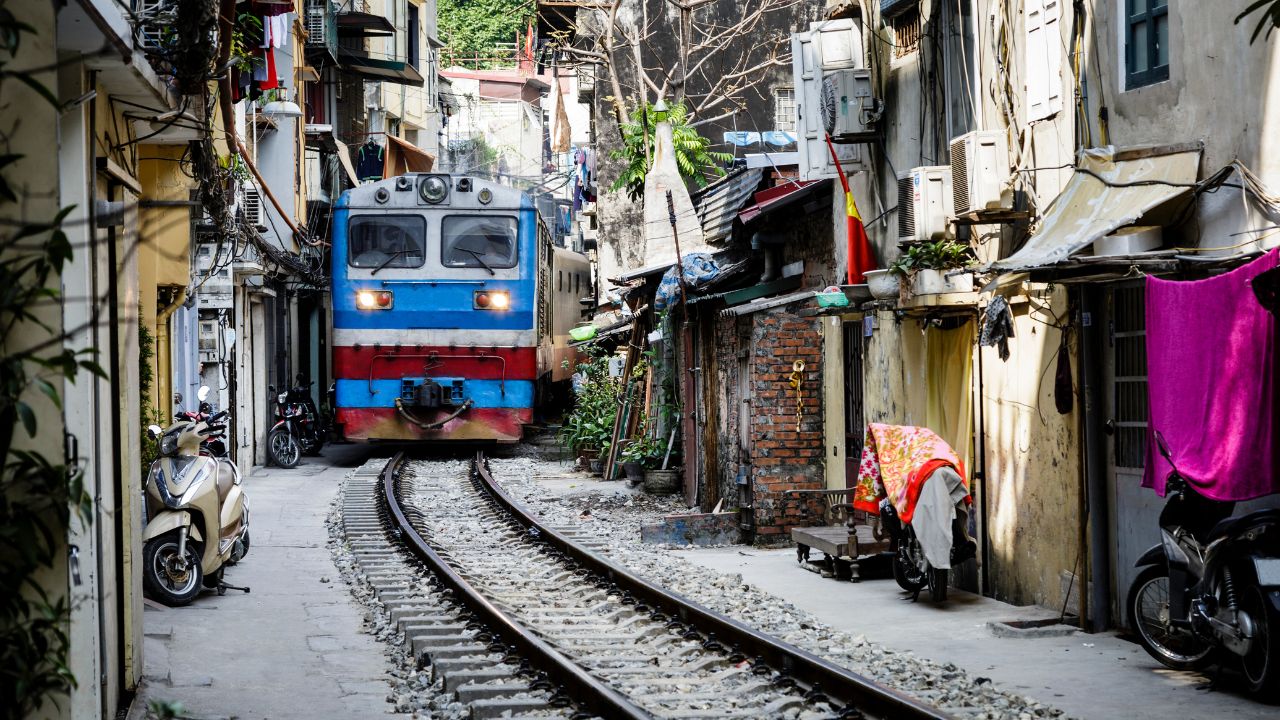
In Hanoi, a section of track runs between houses so close that residents move their chairs when the train passes. Access to the cafes along the tracks has at times been restricted for safety; if you visit, follow local instructions and stay well back from the rails. See our Hanoi destination page.
Travelling by train with children
Children often love the train: bunk beds, changing landscapes and the food trolley make it an adventure. Book a whole four-berth soft sleeper cabin for privacy, bring snacks, books and a torch, and keep a close eye on young children near the doors and between carriages. A daytime ride such as Hue to Da Nang is a good first train trip for families.
Arriving and leaving stations
Stations in the main cities are central and easy to reach by taxi or Grab. Arrive at least 30 minutes before departure, find your carriage number on the platform board and show your ticket and passport to the carriage attendant. When arriving in the early morning, for example in Lao Cai or Hue, it helps to have a transfer arranged in advance, as taxi drivers at the exit can charge high prices.
What to pack for a train journey
- A small bag with what you need for the night, so your main luggage can stay stowed.
- A warm layer for the air-conditioning.
- Earplugs and an eye mask.
- Snacks, water and some fruit.
- Tissues, wet wipes and hand sanitiser.
- A power bank, as sockets may be limited.
Frequently Asked Questions
How long is the train from Hanoi to Saigon?
Around 30 to 36 hours, depending on the train.
Is the train in Vietnam safe?
Yes. Trains are generally safe; keep valuables close, especially on night trains.
What is the best train journey in Vietnam?
The short coastal stretch between Hue and Da Nang is the most scenic, and the night train to Lao Cai for Sapa is a classic experience.
Should I take the train or fly in Vietnam?
Fly for long distances and take the train for shorter scenic routes or overnight journeys.
Plan Your Trip With Us
Want a train journey in your itinerary? We will choose the best route, class and timing for you.