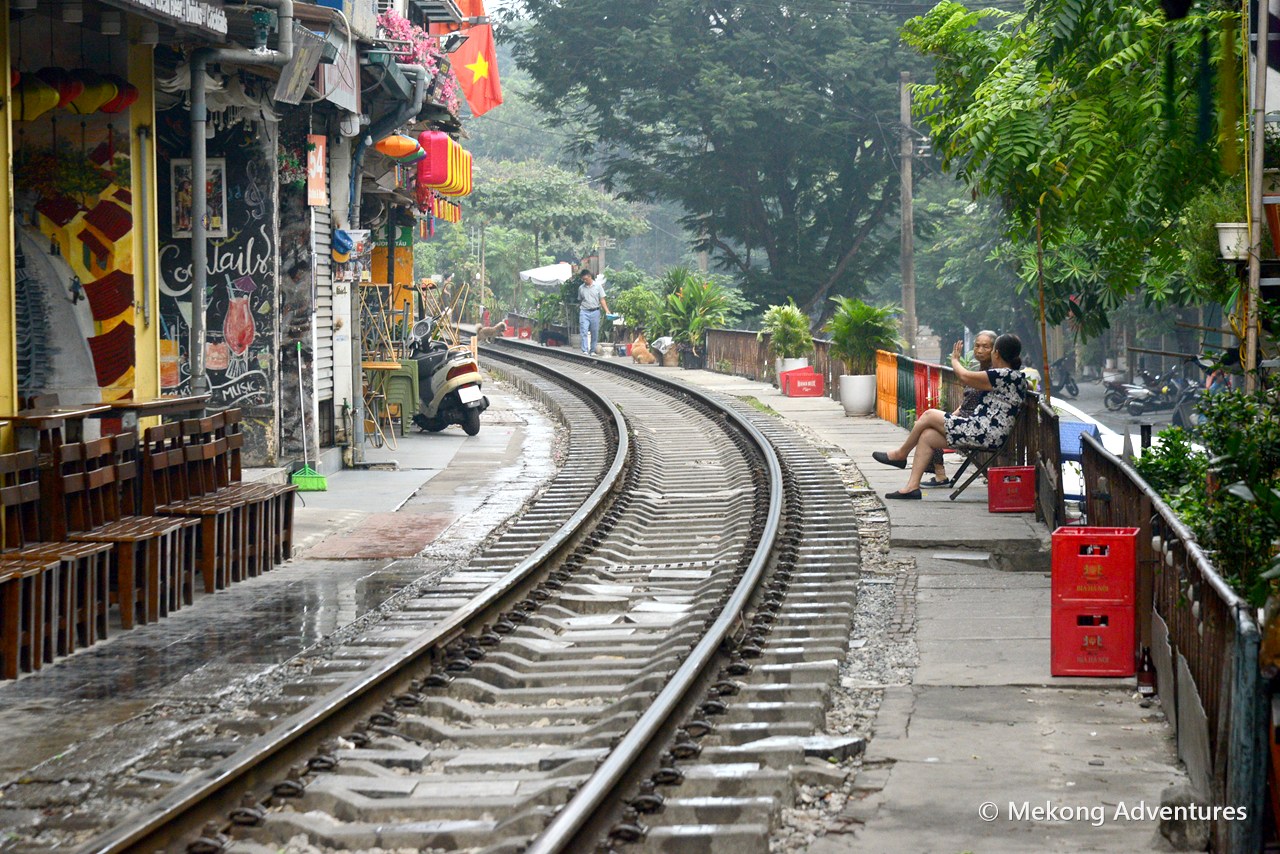
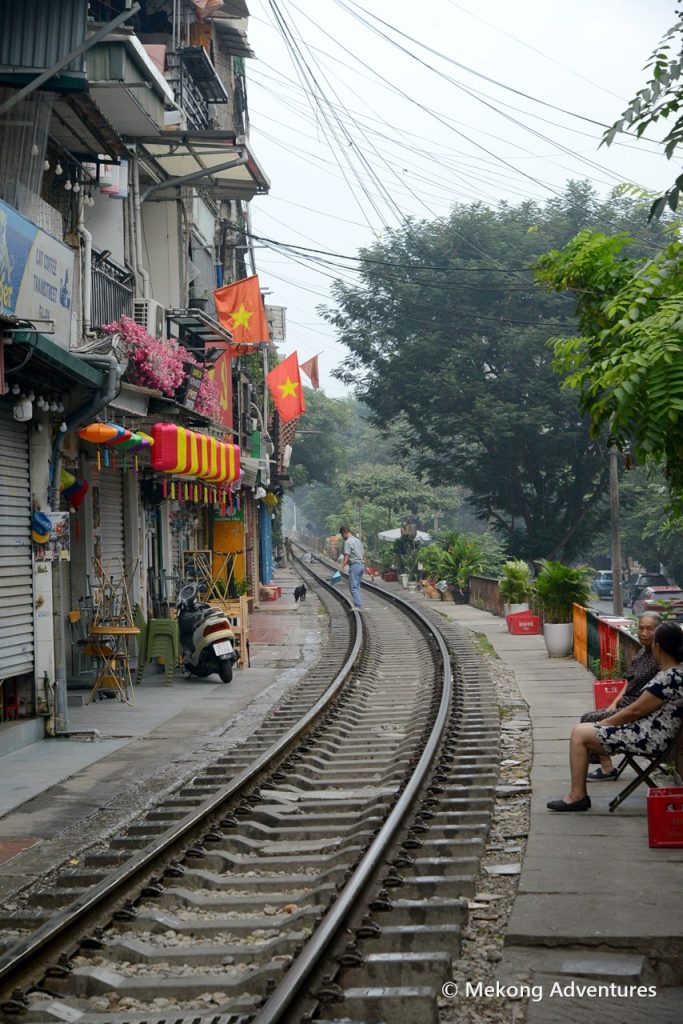
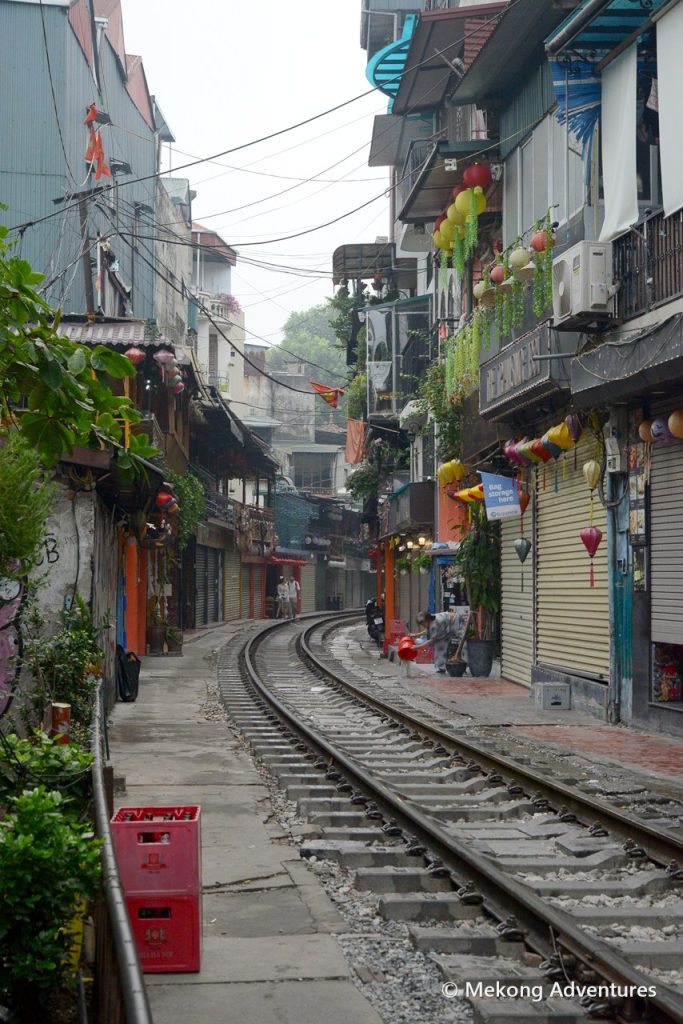
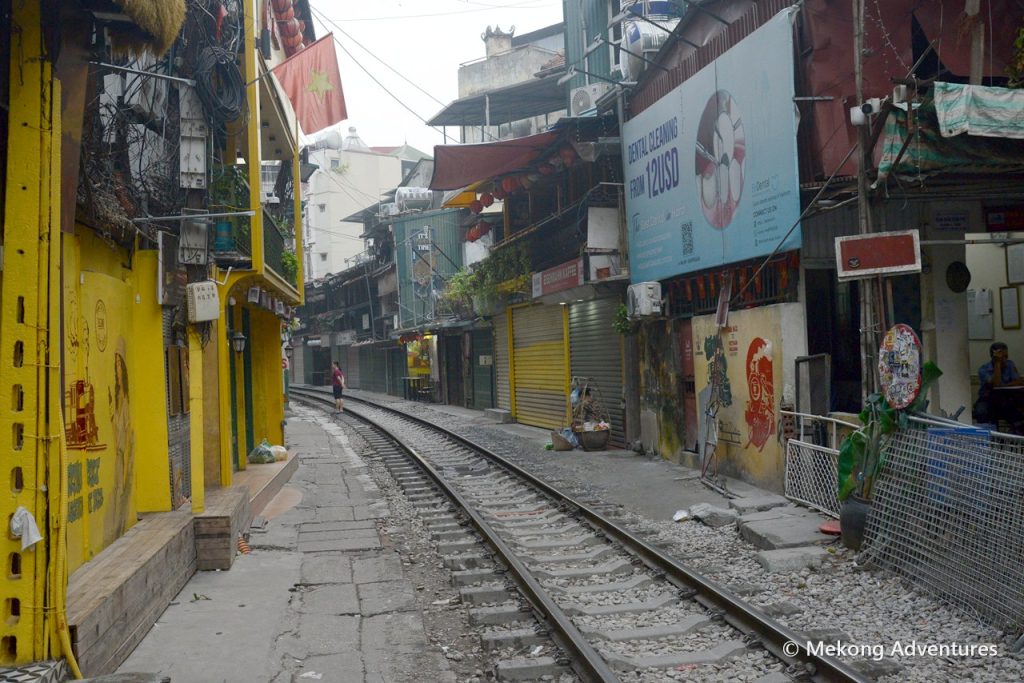
Hanoi Train Street is probably the most photographed street in the capital: a narrow lane of colourful houses where a railway runs right past people’s front doors. It is also one of the most confusing places to plan for. Depending on what you read, it is either closed, open or somewhere in between. The honest answer is that access is restricted and can change from day to day.
This guide explains the history of the street, what the current rules appear to be, how to visit safely and what to do if you are turned away. Please check the situation again locally, as it often changes. For more on the city, see our Hanoi travel guide.
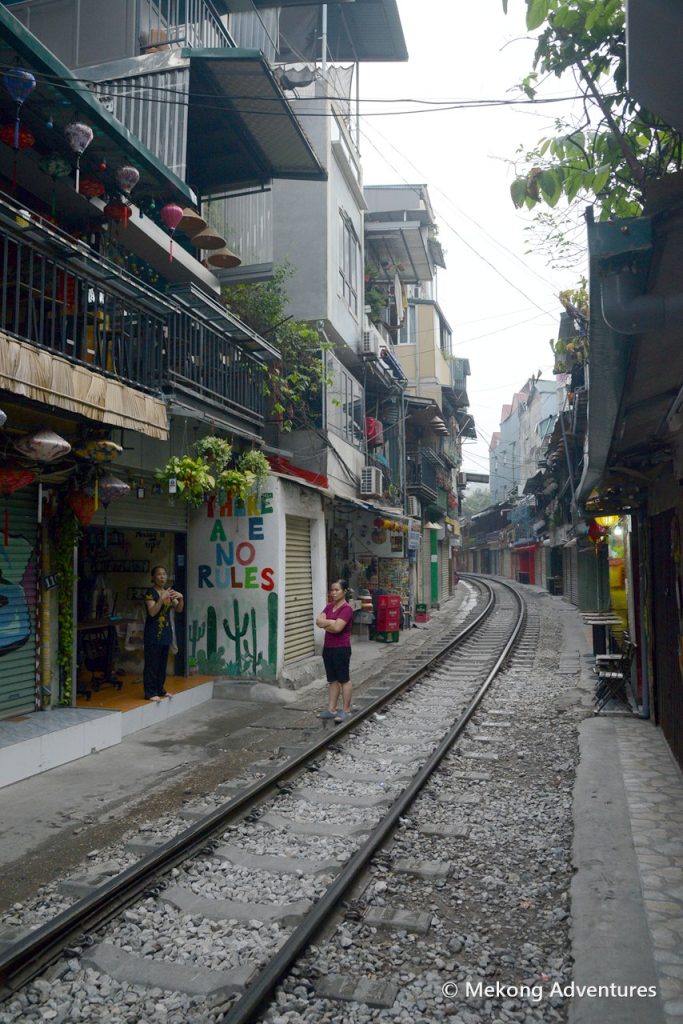
What Is Hanoi Train Street?
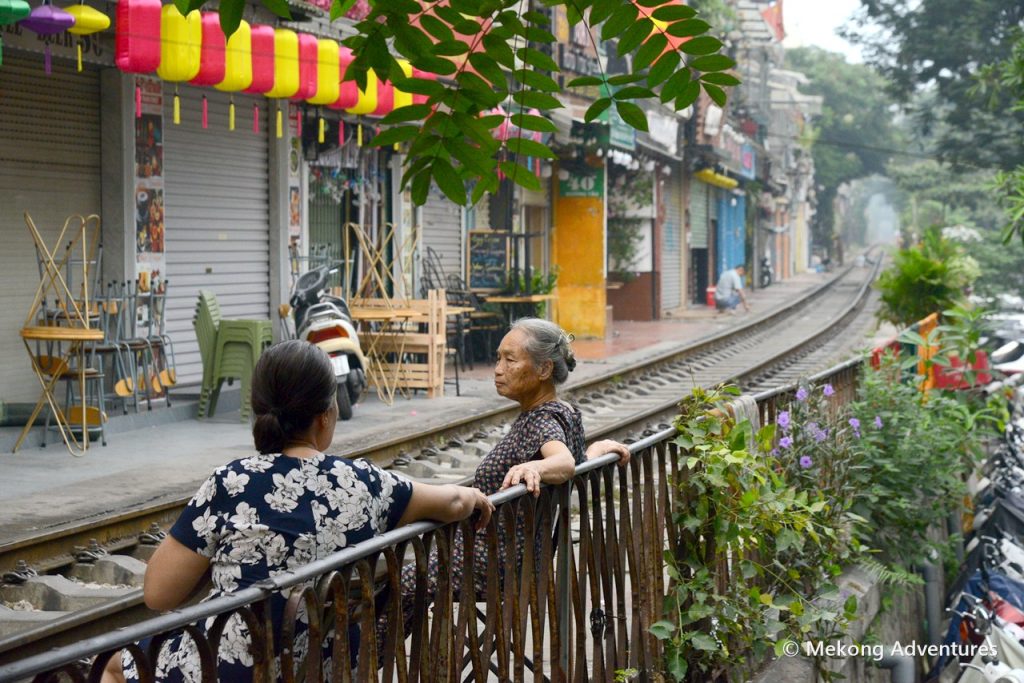
The railway was built during the French colonial period, around the start of the 20th century, to connect Hanoi with other parts of the country. As the city grew, homes were built right up to the tracks. In places, the houses stand only a metre or two from passing trains, and for decades families have cooked, washed and chatted just beside the rails, moving their stools back when a train approaches.
Social media made the street famous in the 2010s. Small cafes opened beside the tracks, and visitors crowded in for photos of trains squeezing past at close range. That popularity led to the restrictions we have today.
Is Hanoi Train Street Open in 2026?
There is no simple yes or no. Here is what the most recent reports and travel guides say:
- No permanent shutdown has been reported, but authorities have repeatedly tried to limit visits for safety reasons, with barriers and police checks in some sections.
- Access varies. Guides describe different sections and even different hours being treated differently. A place that is open one morning may be closed that afternoon.
- Cafes are often the way in. In many reports, visitors can enter only if a cafe owner brings them through and they sit down and buy a drink.
- Tours may be limited. One 2026 guide notes that in March 2025 Hanoi’s tourism authority asked travel agencies not to organise tours to several locations in the area.
We found no official public statement that clearly sets out the current rules, so treat all online advice, including ours, as provisional. If police or barriers tell you not to enter, follow their instructions.
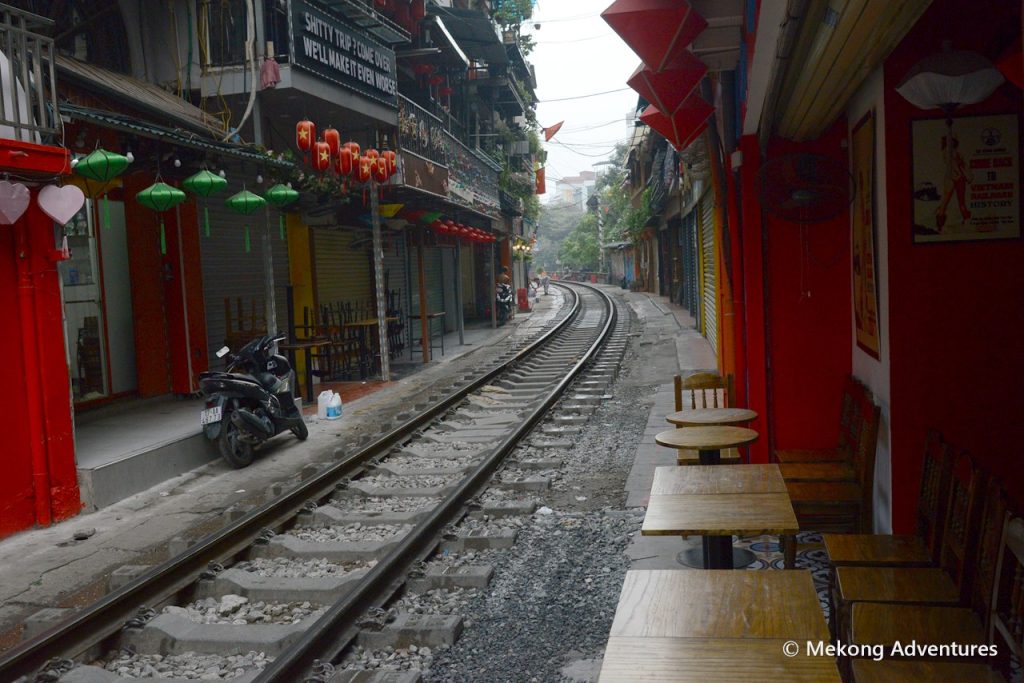
How to Visit Safely and Respectfully
Trains here are real working trains, not a show. They can be surprisingly fast and leave little room. A serious accident would harm you and the families who live there, so these rules are not optional.
- Stay off the tracks. Do not stand, sit or pose on or between the rails, even when no train is due.
- Listen to locals. When cafe staff or residents tell you to move, do so at once.
- Keep your belongings in. Pull in bags, tripods, feet and elbows before the train comes. Do not hold your phone out.
- Stay behind any line or barrier. Do not try to get around closures.
- Remember people live here. Don’t photograph into homes or block doorways, and keep your voice down in the early morning.
- Watch children closely. If you are with young children, it is best to watch from a seated position well back, or skip the visit altogether.
Train Times
There is no reliable public timetable for tourists. These are regular passenger and freight services, and times change often. Guides give very different estimates, from a few trains a day to one every few hours, and evenings and weekends are often said to be busier. Any schedule you find online is only approximate, so ask a cafe owner on the day.
Watch out
Be wary of motorbike drivers near the Old Quarter who say that Train Street is closed and offer to take you to another place. This is a known trick. Ask at your hotel, or call a licensed taxi or app-based ride instead.
How to Get There
The best-known sections lie west of the Old Quarter, around the area between Tran Phu and Le Duan streets. Hanoi Railway Station is also close by. From Hoan Kiem Lake, it is about 15 to 20 minutes’ walk, or a short ride by taxi or Grab. Read our Hoan Kiem Lake guide if you are starting from the lake.
What Does It Cost?
There is no entrance fee, but expect to buy a drink if you sit in a cafe. Check the price before you order, as some places charge more than ordinary city cafes.
Best Time to Visit
- Morning: usually quieter and more local. You can see residents starting their day, and the light is softer.
- Late afternoon and evening: livelier, with lanterns and more cafes open, but more crowded and more likely to have checks.
- Rainy days: fewer visitors, but wet rails and paths. Take extra care.
What If You Cannot Get In?
Don’t argue or try to slip past. Hanoi has plenty of other atmospheric places to explore:
- The Old Quarter: narrow streets of shophouses, markets and street food. Try our self-guided Old Quarter walk.
- Long Bien Bridge: a historic steel railway bridge across the Red River, where trains and motorbikes share the crossing. Our Hanoi by bicycle tour passes this way.
- Hanoi Railway Station: take a real train. See our guide to travelling by train in Vietnam.
- The tracks from a distance: some crossings allow you to see the line from public streets. Stay well back and follow the signs.
Should You Go?
It depends on what you are looking for. If you are keen on urban photography and don’t mind uncertainty, it is worth going to see for yourself, as long as you follow the rules. If you have only a day in Hanoi, or are travelling with young children, you may prefer to spend that time around the lake or in the Old Quarter. Whichever you choose, remember that the railway is first and foremost a neighbourhood where people live.
If you do visit, try to keep your stay short and spend a little in a local cafe. It helps the families who live here and makes the visit better for everyone.
Frequently Asked Questions
Is Hanoi Train Street closed?
There is no reported permanent closure, but access is restricted, and it varies by section and by day. Follow barriers and police instructions.
Is Hanoi Train Street safe?
Trains pass very close to homes, so it can be dangerous if you ignore the rules. Stay off the tracks, and move immediately when told to.
What are the train times?
There is no reliable timetable, and online schedules are only approximate. Ask a cafe owner on the day.
How much does it cost to visit?
There is no entrance fee, but you are usually expected to buy a drink if you sit in a cafe.
Can I take children to Train Street?
It is not ideal for young children because of the narrow spaces and passing trains. If you go, keep them seated well back, or choose another activity.
Discover Hanoi With a Local Guide
See the real life of the city, from its markets to its historic streets, on a private Hanoi tour.